




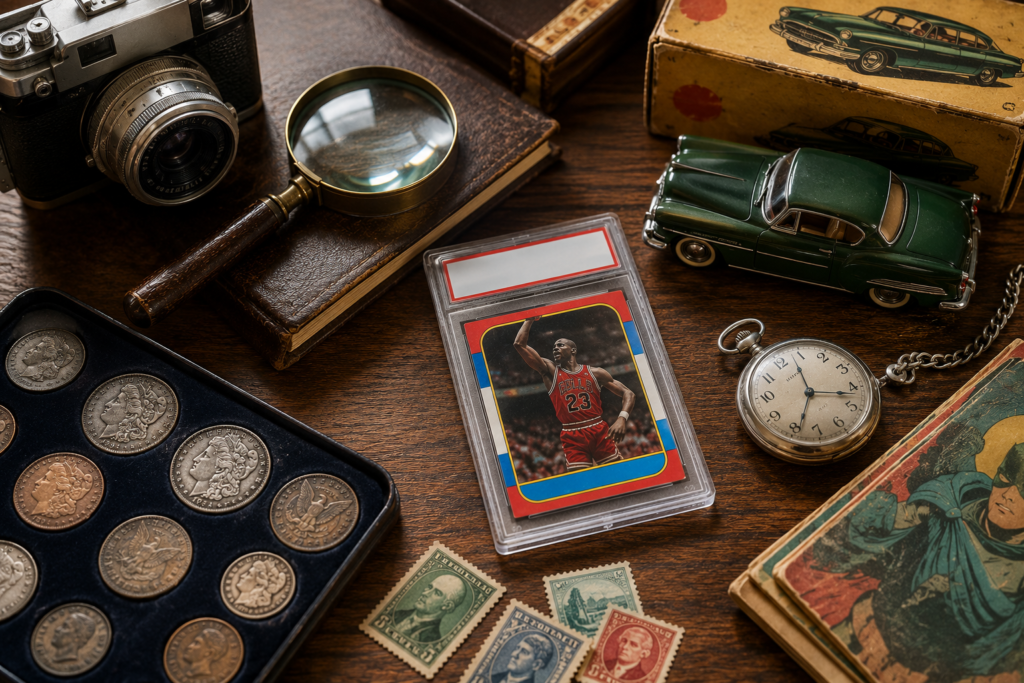
Before you sell a single item from your collection, you need one number: what it is actually worth. Not what you paid for it years ago, not what a similar-looking item sold for back in 2015, and not what a hopeful seller happens to be asking for one right now. Knowing the real value of a collectible before you list it is the difference between a fair payout and a lowball offer, or worse, walking away from an item that was worth far more than you realized.
This guide is part of our broader Used Items Guide series on buying and selling secondhand goods across the US. Below, we break down exactly how to identify what you own, research what it is really worth, and avoid the pricing mistakes that cost sellers real money. Once you know the value, pair this guide with our complete breakdown of where to sell collectibles to match your item to the right buyer.
Why Knowing the Value Matters Before You Sell
Selling blind costs money in both directions. Price a genuinely rare item too low, and it sells in minutes to someone who knew exactly what it was worth. Price a common item too high because you assumed it was rare, and it sits unsold for months while you turn down reasonable offers.
Buyers today research fast. Anyone with a phone can pull up recent sold prices before making an offer, which means sellers who skip that same research start every negotiation at a disadvantage. Doing the value check first puts you back on equal footing, and it usually takes less time than people expect.
There is also a practical side to this: once you know roughly what an item is worth, you know which buyers are even worth contacting. A $20 item does not need an auction house, and a genuinely rare piece deserves more than a quick listing on a general marketplace. Matching your effort to the item’s real value saves time on both ends.
Step 1: Identify Exactly What You Have
Value research only works if you know precisely what you are researching. “Old coin” or “vintage toy” is not specific enough. You need the exact maker, year, edition, or issue before any price guide or sold listing will be useful.
Look for Maker’s Marks, Mint Marks, and Signatures
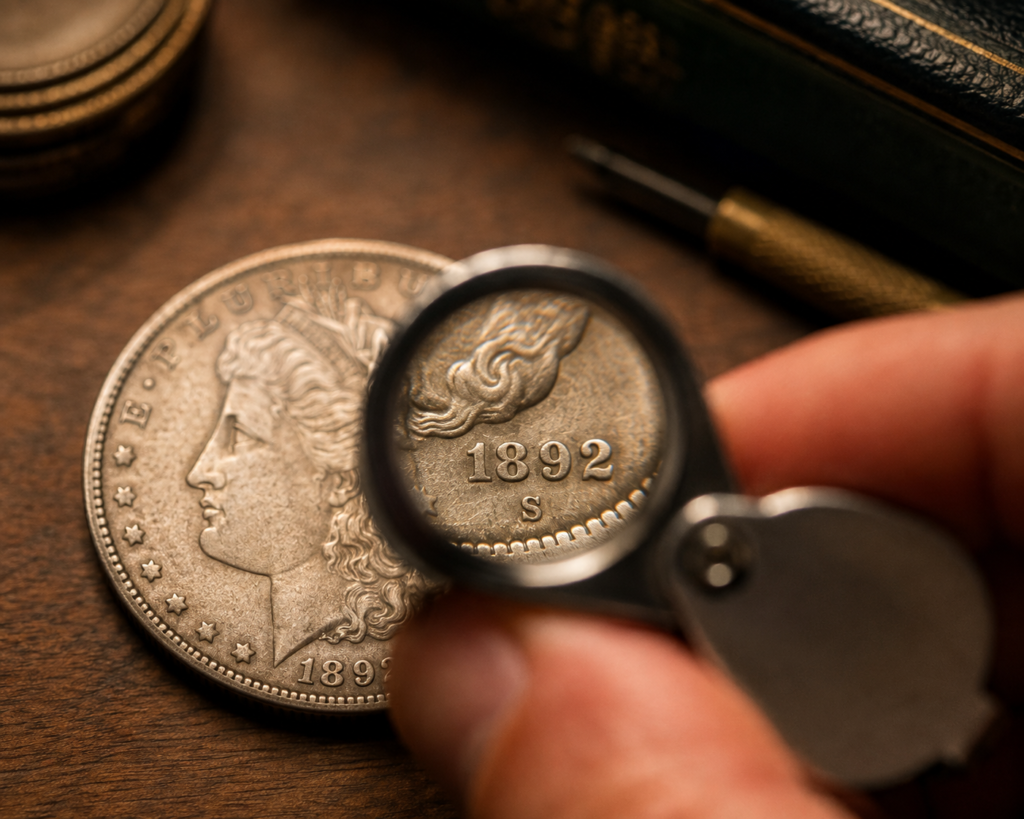
Most collectible categories hide their identifying details in small print: a mint mark on a coin, a copyright date inside a comic, a maker’s stamp on the underside of a figure, or a signature in the corner of a print. A jeweler’s loupe or a smartphone macro photo makes these details easy to read.
Check for Original Packaging and Paperwork
● Original boxes, tags, and inserts, since sealed or complete items consistently sell for more than the same item without packaging
● Certificates of authenticity, receipts, or provenance documents, even informal notes about where and when you acquired the item
● Any grading or authentication slabs, holders, or labels already attached to the piece
● Serial numbers, edition numbers, or limited-run markings printed on the item itself
If you genuinely cannot identify what you have, a reverse image search or a quick post in a category-specific collector forum can often narrow it down fast. Collectors tend to enjoy identifying unusual pieces, and a specific enough description usually gets a useful answer within a day.
Step 2: The Four Factors That Actually Determine Value
Age alone does not create value. Something can be a hundred years old and worth almost nothing, while a item made last year can already be worth several times its original price. Four factors drive nearly every collectible’s real market value.
● Rarity — how many were originally made, and realistically how many survive today in similar condition
● Condition — original packaging, surface wear, damage, and completeness all move the price up or down significantly
● Demand — even a genuinely rare item is only worth what an active pool of buyers is willing to pay right now
● Documentation — provenance, original receipts, or authentication paperwork add real, provable value to higher-end pieces
A useful gut check: rarity and condition set the ceiling on what an item could be worth, while demand decides how close to that ceiling you will actually get paid today.
| Value Factor | What to Check | Why It Matters |
| Rarity | Production numbers, surviving examples, edition size | Sets the theoretical ceiling on price |
| Condition | Wear, completeness, original packaging | Moves price up or down more than any other factor |
| Demand | Recent sold listings, active buyer interest | Determines what you can actually get paid now |
| Documentation | Certificates, receipts, provenance, grading labels | Adds provable value for higher-end items |
Step 3: Research Real Sold Prices, Not Asking Prices
This is the single most common mistake sellers make. Anyone can list an item for whatever price they want, so active asking prices tell you almost nothing about real value. What matters is what buyers actually paid.
Start with eBay’s sold and completed listings, which show real transaction prices rather than wishful asking prices. Filter by your exact item, condition, and, where relevant, grade or edition, then look at several recent sales rather than a single outlier.
For anything you suspect could be genuinely valuable, cross-check it against a dedicated price-research archive like WorthPoint, which stores millions of past sale prices across nearly every collectible category. It is often the fastest way to tell a common item apart from one worth a specialist’s attention.
Look at five to ten recent sold comparisons, not just one. A single sale can be an outlier in either direction, but a cluster of similar prices gives you a realistic range to work with.
Real-World Example: Estimating a Coin’s Value Step by Step
Say you find an old silver dollar in a drawer. Instead of guessing, walk through the process: first, identify the exact year and mint mark using a loupe or macro photo. Second, check whether the date and mint mark combination is common or scarce using a reference price guide. Third, pull five to ten recent sold listings for that exact date, mint mark, and condition grade, not just any silver dollar. Finally, compare that range against the coin’s melt value, the raw silver content, to make sure you are not underselling a coin that is worth more as a collectible than as scrap metal.
This same process, identify, cross-reference, pull sold comps, compare against the floor value, applies almost identically whether you are pricing a coin, a card, or a vintage toy. Only the specific tools change from category to category.
Step 4: Use Category-Specific Value Tools
General research gets you close, but every collectible category has its own specialist tools that give a far more accurate number. Here is where to look, category by category.
Coins & Currency
Coin value comes down to two separate numbers: melt value, what the raw metal is worth, and numismatic value, what collectors will pay above that floor for rarity and condition. A reliable resource like the PCGS price guide lets you look up values by date, mint mark, and grade before you decide anything.
Trading Cards & Comics
Grading changes everything for cards and comics. A raw, ungraded card and the same card professionally graded can sell for dramatically different prices, since a grade removes buyer guesswork about condition. Check a grading company’s population report to see how many examples exist at each grade level before assuming yours is rare.
Toys, Action Figures & Trending Blind-Box Collectibles
Trending blind-box collectibles, the kind covered in our guide to where to buy Labubu in the US, move fast in both directions. Value on these items depends heavily on whether the packaging is sealed, whether tags and QR codes are intact, and how far a specific character or colorway is from its original retail price right now, since trend-driven items can lose value quickly once demand cools.
Vintage Watches & Jewelry
For watches, dedicated marketplaces publish real recent sale data by model and reference number, which is far more accurate than a generic retail estimate. For gold, silver, or gemstone jewelry, get an independent appraisal before assuming melt value is the whole story, since craftsmanship and brand recognition can push the price well above raw material worth.
Servicing history matters more here than in most other categories. A watch with documented service records and its original box and papers can be worth noticeably more than an identical model without them, so gather any paperwork before you research price.
Stamps
Philately is a smaller, more specialized market than coins or cards, so general marketplace searches often undervalue genuinely rare stamps simply because too few interested buyers ever see the listing. A specialty stamp dealer or a philatelic society’s price catalog will give a far more accurate number.
Condition grading for stamps is unusually strict. Centering, gum condition, and perforation quality can each move the price significantly, so photograph your stamps under strong, even light before comparing them to any catalog example.
Antiques & Fine Art
Antiques are the category where expertise matters most. An item that looks unremarkable in a photo can turn out to be a recognized maker’s piece worth a specialist auction, while a similar looking item might be worth very little. When in doubt, a local appraiser or auction house specialist can usually tell within minutes whether an item deserves a closer look.
Look for maker’s marks, foundry stamps, or gallery labels on the underside or back of a piece, since these details often matter more to value than the item’s overall style or apparent age.
Vinyl Records
Records are one of the few categories with a marketplace built specifically around them, where you can confirm the exact pressing, year, and label variant before pricing anything. Two copies of the same album title can be worth very different amounts depending on the pressing, so confirming the exact variant is essential before you research price.
Play condition affects price as much as cover condition. Note any visible scratches, warping, or scuffing separately from the sleeve’s condition, since sold listings typically grade both independently.
Step 5: When a Professional Appraisal or Grading Is Worth the Cost
Grading and appraisal fees are only worth paying when they are likely to add more value than they cost. As a general guideline, anything estimated above roughly $150 in raw, ungraded value is usually worth the fee, since a professional grade or appraisal can meaningfully raise the final sale price and speed up the sale.
● Get it graded or appraised if: the item could plausibly be a key date, first edition, or documented rarity
● Skip it if: sold comps for similar raw, ungraded items already cluster in a low, predictable range
● Always ask a coin shop, card dealer, or appraiser directly whether an item you are unsure about belongs in a specialist auction rather than a standard sale
How to Track Value Changes Over Time
A value estimate is only accurate for as long as market conditions stay stable, and for some categories, that window is short. Coins and jewelry tied to metal spot prices can shift in value week to week, while trend-driven toys and pop-culture collectibles can spike or cool off within a matter of months.
● Set a reminder to recheck sold prices every few weeks for anything tied to a current trend or metal spot price
● Save your sold-comp searches so you can rerun them quickly instead of starting from scratch each time
● Watch for seasonal patterns, since gift-adjacent and holiday-themed collectibles often see demand rise in the weeks before major holidays
● Treat a documented rarity differently, since true numismatic and collector premiums move far more slowly than daily price swings
Common Valuation Mistakes That Cost Sellers Money
● Relying on active asking prices instead of sold and completed listings
● Assuming age automatically means value, when rarity and condition matter far more than how old something is
● Cleaning or restoring an item before checking its value, which often strips original surfaces and lowers price rather than raising it
● Skipping authentication on anything that could be a counterfeit, especially signed memorabilia and trending toys
● Checking value once and never again, when prices for trend-driven or metal-tied items can shift within weeks
● Comparing your item to a different condition, edition, or grade and assuming the price transfers directly
● Trusting a single online value estimate without cross-checking it against actual sold prices
● Overlooking shipping and platform fees when comparing what different buyers are offering
Getting a second opinion is cheap insurance against most of these mistakes. Before accepting any offer on an item you suspect could be valuable, get two or three independent opinions, whether that is a second sold-comp search, a local dealer’s quick look, or a post in a specialist community. A pattern across multiple sources is far more reliable than any single number.
How to Turn a Value Estimate Into an Actual Selling Price
Once you have a realistic value range, the next decision is where to sell it, since the right platform depends heavily on how valuable and how niche your item turns out to be.
● Common, mid-value items usually do best on a general marketplace with broad reach and fast turnaround
● Niche or higher-value items usually net more on a specialty platform where the buyer pool already understands what the item is worth
● Documented rarities are typically worth consigning to an auction house, even after accounting for consignment fees
For a full breakdown of which platform fits which value tier and category, see our guide to the best online marketplaces to sell collectibles, which compares fees, payout speed, and buyer pools side by side.
Do You Need to Pay Taxes on What You Sell?
In the US, profit from selling a collectible for more than you originally paid can be taxable as a capital gain. Keep a simple record of your purchase price and sale price for anything sold at a meaningful profit, and check current IRS guidance on collectibles or speak with a tax professional if you are unsure how a specific sale should be reported.
Quick Value-Check Checklist Before You List
● Identify the exact maker, year, edition, or issue, not just a general description
● Photograph any mint marks, maker’s marks, or signatures clearly
● Pull five to ten recent sold prices for the same item and condition
● Cross-check anything unusual against a dedicated price-research database
● Decide whether grading or appraisal is worth the cost for this specific item
● Recheck pricing if it has been more than a few weeks since your last check
Frequently Asked Questions
How can I find out what my collectible is really worth?
Identify exactly what you have, including maker, year, and edition, then check recent sold and completed listings for the same item in similar condition. Cross-reference anything that looks unusual or rare against a dedicated price-research database before assuming its value.
Is it better to check an asking price or a sold price?
Always use sold prices. Asking prices only reflect what a seller hopes to get, while sold and completed listings show what buyers actually paid, which is a far more reliable guide to real market value.
Do I need to get my collectible graded before finding its value?
Not always. Grading is worth the fee mainly for items likely to be worth more than roughly $150 raw, since a grade can meaningfully raise the price a buyer is willing to pay. For everyday items, sold comps for similar raw examples are usually enough.
Does cleaning an old item increase its value?
Usually not. Cleaning or restoring coins, antiques, and collectibles often strips original surfaces and finishes that collectors specifically look for, which can lower value rather than raise it. Leave an item as-is until a specialist has evaluated it.
How often should I recheck a collectible’s value?
For items tied to metal prices or current trends, recheck every few weeks, since values can shift quickly. For stable, documented rarities, a check every few months is usually enough, since true numismatic and rarity premiums move much more slowly.
What is the difference between rarity and demand?
Rarity is simply how few examples exist. Demand is how many buyers currently want one. A rare item with little demand can still sell for less than a common item that is trending, which is why both factors need to be checked together.
Where should I sell a collectible once I know its value?
It depends on the category and value tier. Common items generally do best on a general marketplace, niche or higher-value items do better on a specialty platform, and documented rarities are usually worth consigning to an auction house.
Can two identical-looking items have very different values?
Yes. Small differences like a specific mint mark, printing variation, or pressing detail that are easy to miss at first glance can separate a common item from a genuinely valuable one, which is why exact identification matters more than a general description.
What is the fastest way to get a rough value estimate?
Pull five to ten recent sold listings for the closest match you can find to your exact item and condition. It will not be as precise as a professional appraisal, but it gives you a realistic range in a few minutes rather than days.
Final Thoughts
Finding the real value of a collectible before you sell takes three things: identifying exactly what you have, checking real sold prices instead of asking prices, and knowing when a professional grade or appraisal is actually worth the cost. Skip any one of those steps and you risk underselling a genuinely valuable item or overpricing a common one until it sits unsold.
Once you have a realistic number, head over to our complete guide on where to sell collectibles to match your item to the buyer pool that will actually pay close to that value. You can also explore more buying and selling guides across Used Items Guide for category-specific resale advice and city-by-city buying tips.
