






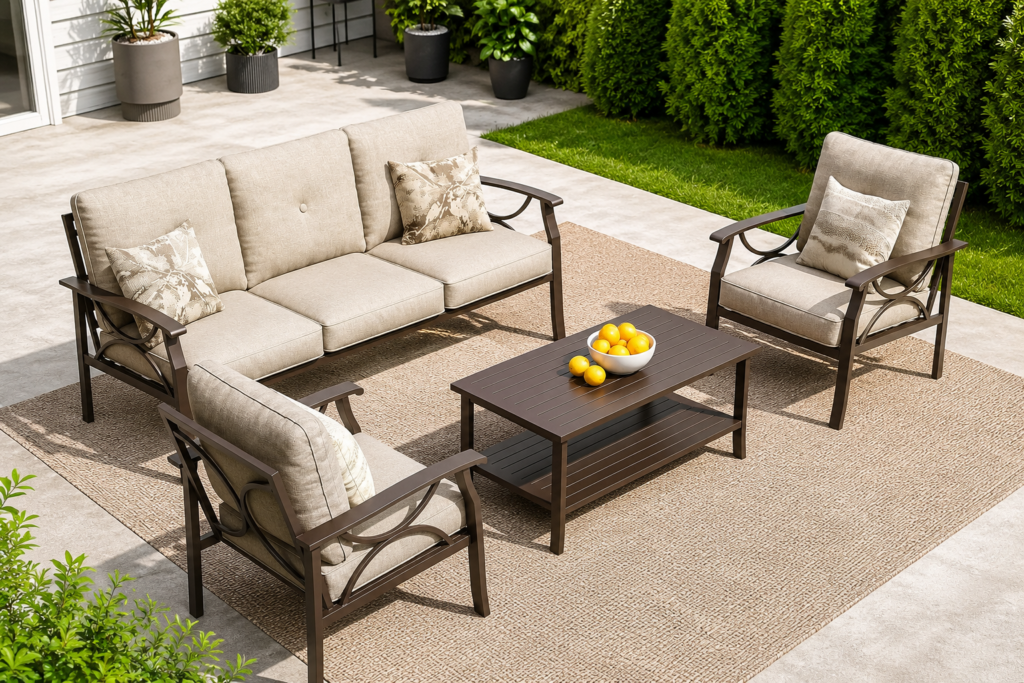
Outdoor furniture holds its value better than almost any other used furniture category — but only if you list it in the right place. A teak dining set, a wicker sofa, or a set of Adirondack chairs sells fastest on marketplaces built for heavy, local-pickup items, not necessarily the app you’d use to sell a lamp or a bookshelf.
This guide covers the best places to sell outdoor furniture in the US, how to price different materials and styles, how to photograph pieces so they actually get clicks, and the seasonal timing that can significantly change what you walk away with. We’ll also cover common mistakes to avoid, how to decide between selling and donating, and answers to the questions sellers ask most.
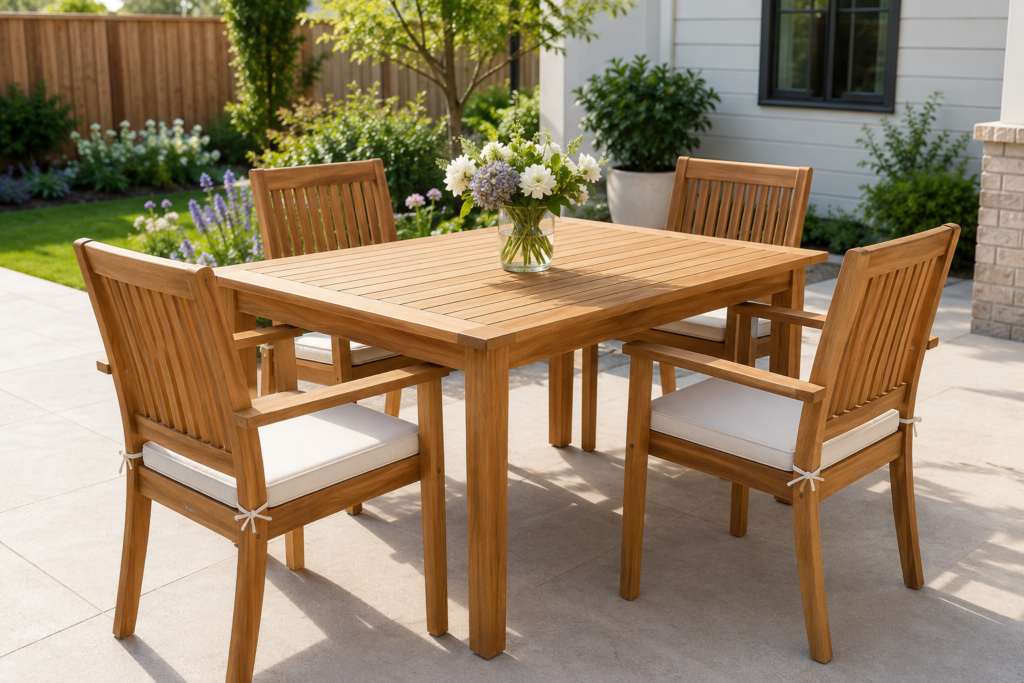
How to Decide Which Platform Is Right for You
With eight solid options, the fastest way to narrow it down is to ask three quick questions about what you’re selling.
What’s the piece worth?
Under $500 and fairly generic (a big-box patio set, plastic Adirondack chairs, a basic umbrella): start with Facebook Marketplace or Nextdoor. Over $1,000 or from a known design brand: try Chairish or eBay first, where buyers expect to pay more for quality and provenance.
How big and heavy is it?
A single chair, side table, or umbrella stand can ship, which opens up eBay as an option. A full sectional, a stone-top table, or a multi-piece dining set almost always needs to sell locally, since freight shipping costs can quickly exceed the furniture’s resale value.
How fast do you need it gone?
If you need the space cleared this week, Craigslist and Facebook Marketplace tend to move fastest because buyers there expect same-day pickup. If you’re fine waiting for the right buyer at a better price, Chairish, eBay, or a consignment shop can be worth the extra time.
Common Mistakes to Avoid When Selling Outdoor Furniture
• Listing without dimensions — buyers skip past listings that don’t state size upfront, since patio space is usually limited
• Using old photos from when the item was new instead of current photos showing its actual condition
• Pricing based on what you paid rather than what similar used pieces are actually selling for locally right now
• Ignoring the weather — a good listing photographed on a rainy, dim day looks far worse than the same piece shot in sunlight
• Ghosting interested buyers — respond quickly, since bulky items like patio sets attract fewer serious inquiries than small household goods, and each one matters
• Not mentioning missing parts (a lost cushion, a broken umbrella crank) upfront, which leads to canceled sales at pickup
Why Outdoor Furniture Sells Faster Than You Think
Patio furniture is bulky, expensive to ship, and expensive to replace — three things that work in a seller’s favor. Buyers would rather pay a fair secondhand price and pick it up themselves than order a new set online and wait weeks for freight delivery.
Materials matter too. Teak, wrought iron, and powder-coated aluminum age well and keep more of their original value, while resin and plastic sets depreciate faster once they show sun fading or cracking. Timing plays a role as well: listings posted in early spring routinely sell faster and for more than the same set listed in November, simply because buyers are actively furnishing patios and backyards at that point in the year. If you’re wondering where to list your patio set for the best return, check out our guide to best places to sell outdoor furniture before creating your listing.
Seasonal demand isn’t unique to outdoor furniture, either. We see the same pattern in our guide to where to sell used baby items in the US, where certain months consistently bring more buyers than others. Outdoor furniture just has a longer, more predictable window: roughly February through July.
8 Best Places to Sell Outdoor Furniture in the US
1. Facebook Marketplace
Facebook Marketplace is the default starting point for most sellers, and for outdoor furniture specifically it’s hard to beat. There are no listing fees, the local-pickup model avoids shipping altogether, and the buyer pool in most US metro areas is large enough that a fairly priced patio set rarely sits for more than a week.
Tips for this platform:
• Put the dimensions in the first line of the description — buyers need to know if a set fits their patio before they message you
• Mention “porch pickup” or “driveway pickup” to signal easy logistics
• Post in 2–3 relevant local buy-and-sell groups in addition to the main Marketplace listing
Skip it if you have a high-end designer set worth $1,500 or more — Facebook buyers tend to be price-sensitive, and premium pieces often get lowballed here.
2. Craigslist
Craigslist remains surprisingly effective for outdoor furniture, especially large lots and full patio sets sold together. The audience here expects to negotiate, pay cash, and pick up the same day, which makes it a good fit if you want the furniture gone quickly rather than maximizing price.
Craigslist also allows more detailed, keyword-rich descriptions than most apps, which helps your listing surface in local searches for specific brands or materials.
3. Nextdoor
Nextdoor verifies users by address, so buyers already trust that you’re a real neighbor rather than an anonymous stranger. That trust factor makes it one of the easiest platforms for arranging same-day driveway pickups, and it works well for everything from a single Adirondack chair to a full teak dining set.
4. OfferUp
OfferUp works similarly to Facebook Marketplace but with a built-in rating system and in-app messaging that some sellers find easier to manage than Marketplace’s inbox. It’s a solid second listing to run alongside Facebook rather than a replacement for it — cross-posting on both usually doubles your inquiries with very little extra effort.
5. eBay
eBay makes sense when a piece is small enough to ship, collectible, or from a recognizable brand — think a single designer side table, a vintage umbrella stand, or a set of cushions from a known outdoor brand. Bulky patio sets are usually not worth shipping, but individual accent pieces can do well here, especially with a “Best Offer” option enabled so buyers can negotiate without you having to relist at a lower price.
6. Chairish
Chairish is built for design-conscious buyers and works best for outdoor furniture with a designer name attached — think Pottery Barn, West Elm, RH, or genuine vintage wrought-iron and rattan pieces. Trying to sell a generic big-box patio set here usually falls flat, but a well-photographed designer piece can earn a meaningfully higher price than it would on a general marketplace.
7. Local Consignment Shops & Habitat for Humanity ReStore
If you’d rather not deal with messaging strangers at all, a local consignment shop or a Habitat for Humanity ReStore location will take furniture off your hands directly. Consignment shops typically pay out a percentage once the piece sells, while ReStore accepts donations and can provide a receipt for a tax deduction. This route trades some profit for convenience, which is worth it for sellers who value their time over squeezing out the last dollar.
8. Garage Sales & Community Classifieds
For sellers who want cash in hand the same weekend, a garage sale or a local print/community-board classified still works, particularly for smaller pieces like folding chairs, side tables, and umbrellas. It won’t reach as many buyers as an online listing, but there’s no waiting on messages and no shipping to coordinate.
How Much Is Your Outdoor Furniture Worth?
Pricing used outdoor furniture comes down to three factors: material, condition, and how many comparable listings are currently active near you.
• General rule of thumb: price at one-third to one-half of the original retail price for a set in good condition that’s under five years old
• Teak, wrought iron, and powder-coated aluminum hold value better than resin, plastic, or basic wicker
• Cracked frames, faded fabric, rust, or missing pieces (like a lost umbrella pole) can cut the price in half or more
• Check 5–10 comparable local listings for the same brand and material before setting your price — the middle of that range is usually close to fair market value
• Price slightly above your walk-away number if you’re open to negotiating, since most buyers on these platforms expect to make an offer
Avoid the common mistake of underpricing just to move a piece fast. Rock-bottom prices tend to attract buyers who aren’t serious, ask for free delivery, or negotiate even further down — a fair, well-researched price usually sells just as quickly with far less back-and-forth.
Pricing by material: what typically holds value
• Teak — ages gracefully and silvers over time rather than deteriorating, so it often retains 40–60% of retail value even after several years
• Wrought iron — heavy and durable; resale value stays strong as long as rust is minimal and repainting hasn’t been needed
• Powder-coated aluminum — lightweight and rust-resistant, a mid-range performer that holds value well if cushions are included
• Resin wicker — depreciates faster once strands start to crack or fray, especially in high-sun climates
• Basic plastic — the lowest resale category; price these to move quickly rather than holding out for a premium
Negotiating without underselling yourself
Most buyers on these platforms will ask, “Is this still available?” and then immediately follow with an offer below asking price. It helps to decide your walk-away number before you post, so you’re not deciding on the spot. Small concessions — like reducing $50 in exchange for the buyer picking up on your schedule — tend to close deals faster than large price drops.
How to Photograph Outdoor Furniture So It Sells Faster
Buyers are making a decision without ever touching the piece, so photos are doing most of the selling for you.
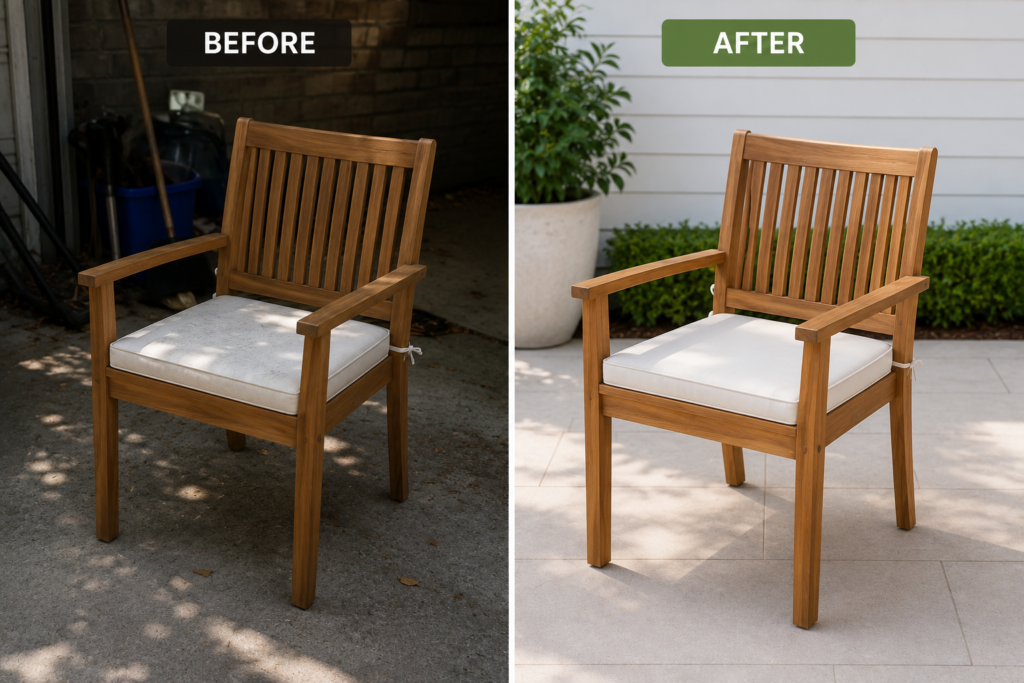
• Clean the furniture first — hose down cushions, wipe frames, and let everything dry before shooting
• Clear the background — move hoses, toys, and trash cans out of frame so the furniture is the focus
• Shoot in natural daylight, ideally late morning or late afternoon to avoid harsh shadows
• Capture the full set from the front, back, and sides, then add close-ups of material texture and any hardware
• Photograph flaws honestly — a clear photo of a scratch or a faded panel builds trust and heads off disputes after the sale
Writing a Listing Description Buyers Actually Click On
A strong description answers the questions a buyer would otherwise have to message you about. Lead with the essentials:
• Dimensions (so buyers instantly know if it fits their space)
• Material (teak, wrought iron, aluminum, resin, wicker)
• Brand, if known — recognizable names like Pottery Barn or West Elm can justify a higher price
• Condition, including any flaws, stated plainly
• Pickup details — driveway, porch, or if help loading is available
Example: “Teak 5-piece patio dining set, seats 4. Table is 60\” x 36\”. Purchased 2022, light weathering on the tabletop, chairs in excellent shape. Easy driveway pickup, can help load into a truck or SUV. $450, price is negotiable.”
Best Time of Year to Sell Outdoor Furniture
February through July is the strongest window across most of the US, as buyers start furnishing patios well before peak summer. Listings posted in early spring routinely move faster — and for a noticeably better price — than the exact same set listed in late fall or winter, when buyer demand for outdoor pieces drops off almost entirely.
If your furniture is still in good shape and you’re not in a rush, it’s often worth storing it over the winter rather than listing it at a steep discount in November or December.
The exact window shifts a little by region. In warmer states like Florida, Texas, and Arizona, outdoor furniture sells year-round with only a modest spring bump, since patios get used in most months. In colder states across the Midwest and Northeast, the season is more compressed — demand jumps sharply in April and May and drops off almost completely by October, so timing matters more if you’re selling in those regions.
Cross-Posting: List in More Than One Place
There’s no rule against listing the same piece on multiple platforms at once, and most experienced sellers do exactly that. A common approach is posting on Facebook Marketplace and Nextdoor at the same time, since both are free and target local buyers, then adding OfferUp as a third listing if the piece hasn’t sold within a week.
• Use the same clear photos and consistent pricing across every platform to avoid confusing buyers who see the item twice
• Mark a listing as sold everywhere as soon as it sells, so you’re not fielding messages for something that’s already gone
• For higher-value or designer pieces, add Chairish or eBay as a fourth listing rather than relying only on local marketplaces
Tips for Selling Bulky Sets and Large Pieces
• Measure doorways, gates, and stair turns ahead of time and mention any tight spots in the listing
• Decide upfront whether you’ll sell the set together or piece by piece — full sets move faster, but individual pieces can sometimes add up to more money
• Be upfront about weight, especially for stone-top tables or cast-iron pieces that may need two people to move
• Local pickup only for anything too large or heavy to ship affordably — don’t try to force a Craigslist-style item onto eBay
• Recruit help for loading in advance rather than scrambling when the buyer arrives — a smooth pickup leads to better reviews and repeat referrals if you’re selling multiple pieces
• Offer to disassemble modular sectionals if possible, since smaller pieces are easier for buyers to transport in a standard vehicle
Should You Sell It or Donate It?
Not every piece is worth the time it takes to photograph, list, and manage messages. As a rough guide, if a piece would sell for less than $50 after accounting for the time spent listing and coordinating pickup, donating it to a local Habitat for Humanity ReStore or a thrift store is often the better trade-off — you get a tax-deduction receipt and skip the back-and-forth entirely.
On the other hand, sets worth $150 or more, designer pieces, and anything made of teak or wrought iron are almost always worth listing yourself, since the resale value comfortably outweighs the extra effort.
Staying Safe When Meeting Local Buyers
• Meet during daylight hours whenever possible, ideally with the item visible from your driveway or porch
• Have a friend or family member nearby during the handoff for larger sales
• Prefer platforms with verified profiles (Nextdoor, Facebook) over anonymous classifieds when meeting someone new
• Accept cash or a verified payment app at the time of pickup rather than shipping first and getting paid later
Frequently Asked Questions
How much can I get for used outdoor furniture?
Most sets in good condition sell for one-third to one-half of their original retail price, with teak and wrought iron holding value best and resin or plastic sets selling for less.
What’s the best time of year to sell patio furniture?
Late winter through early summer, roughly February to July, is when demand and prices are highest across most of the US.
Should I sell outdoor furniture as a set or individually?
Selling as a full set is usually faster and easier to manage, but individual pieces — especially a standout chair or side table — can sometimes bring in more money combined than the set would as a whole.
Is it better to sell locally or ship nationwide?
For most outdoor furniture, local pickup through Facebook Marketplace, Craigslist, or Nextdoor is more practical. Reserve shipping platforms like eBay for smaller, higher-value, or designer pieces that are worth the packing effort.
What outdoor furniture materials hold value best?
Teak, wrought iron, and powder-coated aluminum tend to hold value the longest. Resin, plastic, and basic wicker depreciate faster, especially once they show sun fading or cracking.
Is it worth selling a single outdoor chair or small piece?
Yes, if it’s in decent shape or from a recognizable brand. Single pieces sell well on Facebook Marketplace, Nextdoor, or eBay, especially when priced under $75, since buyers often just need one replacement piece rather than a full set.
Should I clean or repair furniture before selling it?
A basic clean is always worth it and takes minutes. Minor repairs, like tightening loose bolts or replacing a missing foot cap, are usually worth doing too, since buyers will otherwise factor a discount into their offer that’s often larger than the cost of the fix.
Final Thoughts
Selling outdoor furniture comes down to picking the right platform for what you own, pricing it based on real local comps, and photographing it honestly so buyers trust the listing enough to message you first. Start with Facebook Marketplace or Nextdoor for most pieces, move up to eBay or Chairish for designer items, and time your listing for spring if you can afford to wait.
For more category and city-specific buying and selling guides, browse the full collection at Used Items Guide.
If you’re clearing out a garage along with your patio set, our guide on where to buy used tires in Chattanooga, TN is a good next read for more regional resale tips.
