


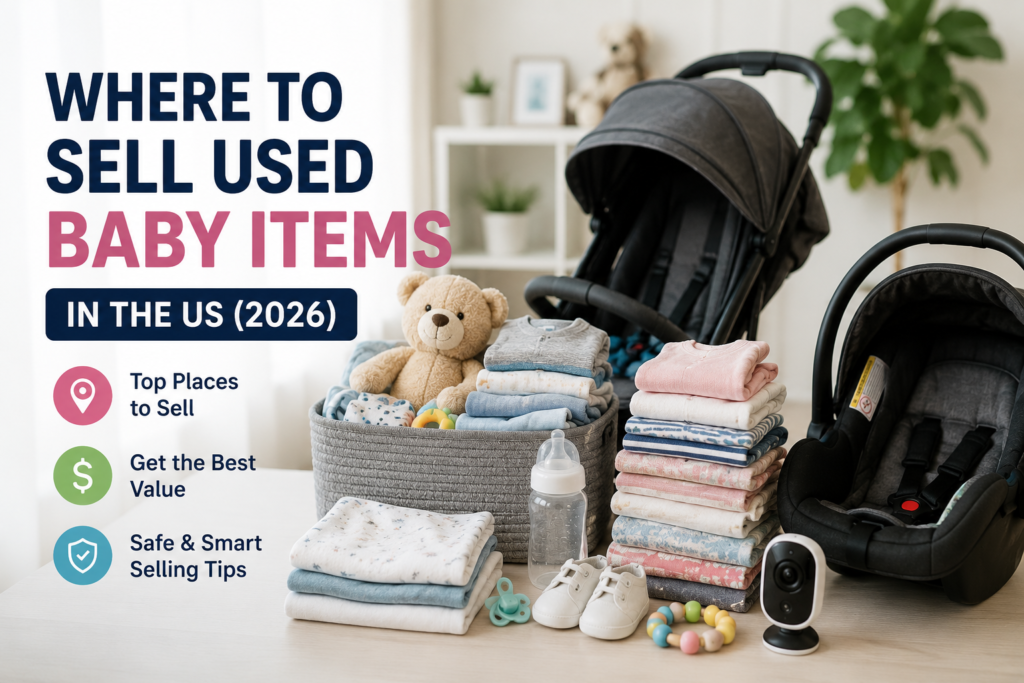
Babies outgrow gear fast. A crib that felt essential in month one is often gathering dust by month eight. A car seat gets replaced the moment your child hits the next weight bracket. Clothes barely make it through two washes before they’re too small.
If your closet, garage, or nursery is full of things your child no longer needs, selling them is one of the easiest ways to recover some of that money — and help another family save on the same expensive gear.
The used baby gear market has grown steadily every year, driven by two things: the rising cost of new baby products, and a much wider comfort level with buying secondhand than a decade ago. Strollers alone can retail for $400–$1,200 new, and most babies use one for less than two years before outgrowing it or moving to a different style. That’s a lot of usable value sitting in a closet if it’s never resold.
This guide covers every realistic way to sell used baby items in the US in 2026, what actually sells, what you legally cannot resell, and how to avoid scams while doing it.
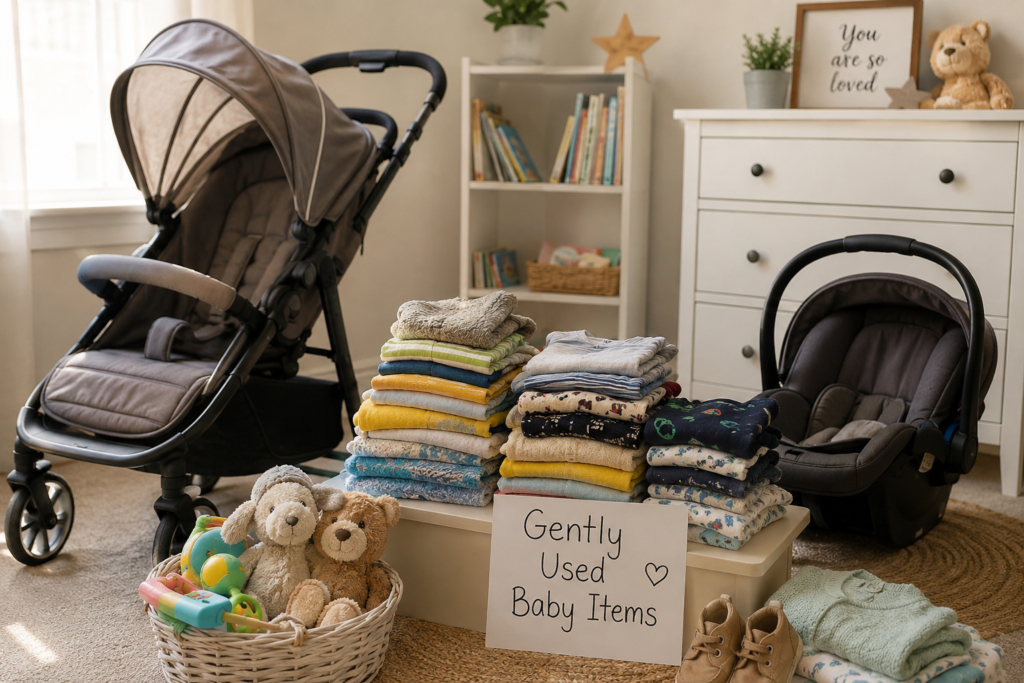
Quick Answer: Best Places to Sell Used Baby Items
If you only read one section, read this one.
- Fastest, no fees: Facebook Marketplace and local parent Facebook groups
- Best for clothes and small gear: Kidizen, Poshmark, ThredUp
- Best for big-ticket items (strollers, cribs, furniture): Facebook Marketplace, Nextdoor, local consignment sales
- Best for hands-off selling: Once Upon A Child and local consignment shops
- Best for community goodwill instead of cash: Buy Nothing groups and local donation centers
Now let’s go through each option in detail, along with what to avoid.
Before You Sell: Check for Recalls First
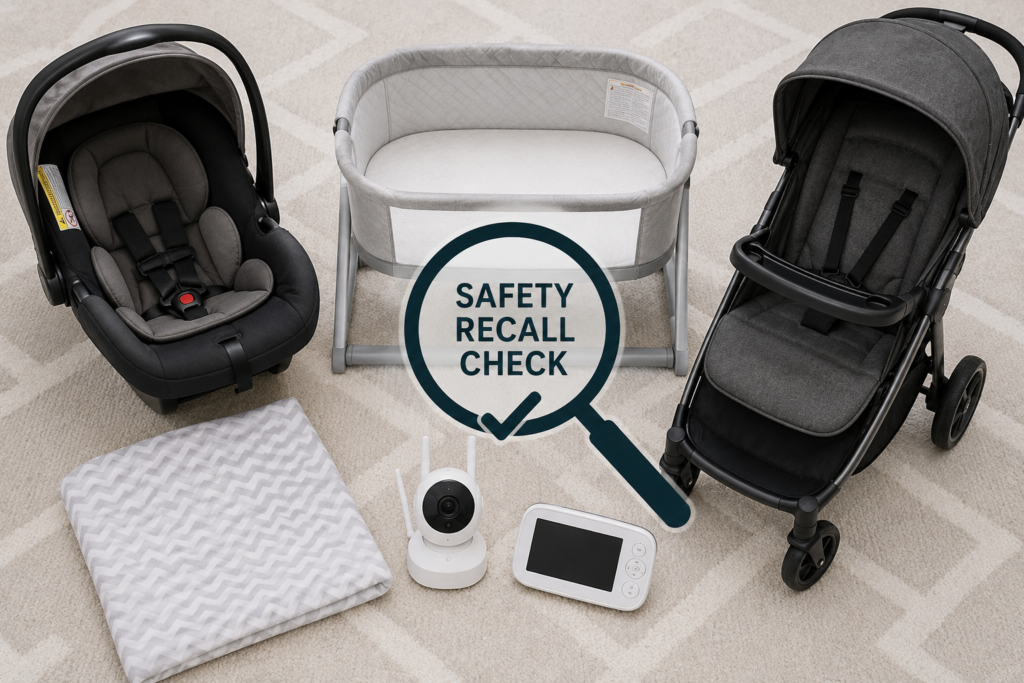
This step comes before pricing, before photos, before anything else. Baby products are recalled more often than almost any other consumer category, and reputable marketplaces and shops will reject recalled items anyway.
Before listing anything, check your item against the CPSC’s official recall database. This applies especially to:
- Cribs and bassinets
- Car seats and booster seats
- Baby loungers and inclined sleepers
- Infant swings and bouncers
- Baby monitors and any item with cords
- Toys with small parts, magnets, or button batteries
Selling a recalled item isn’t just risky for the buyer — in most states it can create liability for you as the seller. If an item shows up on the recall list, don’t resell it. Dispose of it according to the manufacturer’s instructions instead.
What You Legally Cannot Resell
A few categories are off-limits no matter which platform you use:
- Recalled products of any kind
- Cribs made before June 2011, when new federal crib safety standards took effect
- Drop-side cribs, which are banned outright
- Car seats past their expiration date (usually 6–10 years from manufacture date, printed on a sticker under the seat)
- Car seats that have been in a moderate-to-severe crash, even if they look undamaged
- Breast pump attachments that touch milk (the pump motor itself can sometimes be resold, but FDA guidance treats breast pumps as single-user medical devices for hygiene reasons)
- Used crib mattresses — most reputable resale platforms won’t accept these due to hygiene and safety concerns
If you’re not sure whether an item qualifies, most consignment shops will tell you for free before you even bring it in.
Best Places to Sell Used Baby Items
1. Facebook Marketplace
This is still the most-used platform for selling used baby gear in the US. It’s free, it’s local, and buyers can see exactly where you are before messaging.
Best for: Strollers, cribs, high chairs, playpens, bouncers, and bulk clothing lots.
Tips:
- List items individually for gear, but bundle clothes by size and season
- Add measurements for furniture — buyers ask this constantly
- Meet in well-lit public places, or a police station’s designated exchange zone if your city offers one
2. Local Parent and Mom Facebook Groups
Nearly every US city has a “Mom’s Buy/Sell/Trade” or “Parents of [City]” Facebook group. These groups are often better than general Marketplace because the audience is already looking for baby-specific items.
Best for: Everything, but especially niche items like baby-wearing wraps, breastfeeding pillows, and specific stroller brands that general buyers wouldn’t search for.
3. Kidizen
Kidizen is a resale app built specifically for kids’ and baby clothing, shoes, and gear. Sellers list items, buyers browse by size and brand, and the app handles shipping labels.
Best for: Baby clothes, shoes, and lightly used accessories you want to ship rather than sell locally.
4. Poshmark
Originally a fashion resale app, Poshmark now has a large baby and kids category. It works well for name-brand baby clothing and accessories.
Best for: Higher-end baby clothing brands and accessories that photograph well.
5. ThredUp
ThredUp is a mail-in resale service. You request a “Clean Out” kit, fill a bag with baby and kids clothing, and mail it in. ThredUp inspects, photographs, lists, and sells the items for you, then pays you a percentage.
Best for: Parents who want zero effort and don’t mind lower payouts in exchange for convenience. Not ideal if you want maximum dollars per item.
6. Once Upon A Child
This is a national chain of used kids’ and baby stores with hundreds of locations across the US. You bring items in, they inspect and offer cash on the spot — no waiting for something to sell.
Best for: Clothing, toys, gear, and furniture in good condition, when you want same-day cash instead of listing and waiting.
Tip: Call ahead — most locations buy seasonally (winter clothes in fall, summer clothes in spring) and won’t take off-season items.
7. Local Consignment Shops
Unlike Once Upon A Child, you typically don’t get paid upfront at a consignment shop — the shop displays your item and pays you a percentage (usually 40–60%) once it sells.
You can find consignment shops near you through the NARTS resale shop directory, which lists verified consignment and resale businesses across the country.
Best for: Sellers who don’t need cash immediately and want someone else to handle pricing, display, and buyer questions.
8. Consignment Sale Events (JBF-style pop-up sales)
Seasonal consignment sales — the largest network being Just Between Friends (JBF) — pop up in convention centers and community halls across the US, usually twice a year. Parents drop off tagged items, the sale runs for a weekend, and you collect a percentage of what sold.
Best for: Selling a large volume of items at once — clothes, gear, toys, and furniture together — without managing individual listings.
9. Nextdoor
Nextdoor works similarly to Facebook Marketplace but is hyperlocal by neighborhood, which makes pickup easier for bulky items like cribs, changing tables, and dressers.
Best for: Large furniture items where you want a buyer who lives within walking or short driving distance.
10. OfferUp
OfferUp functions like a mobile-first version of Craigslist with built-in messaging and optional shipping for smaller items.
Best for: A backup listing spot alongside Facebook Marketplace — post in both places to widen your buyer pool.
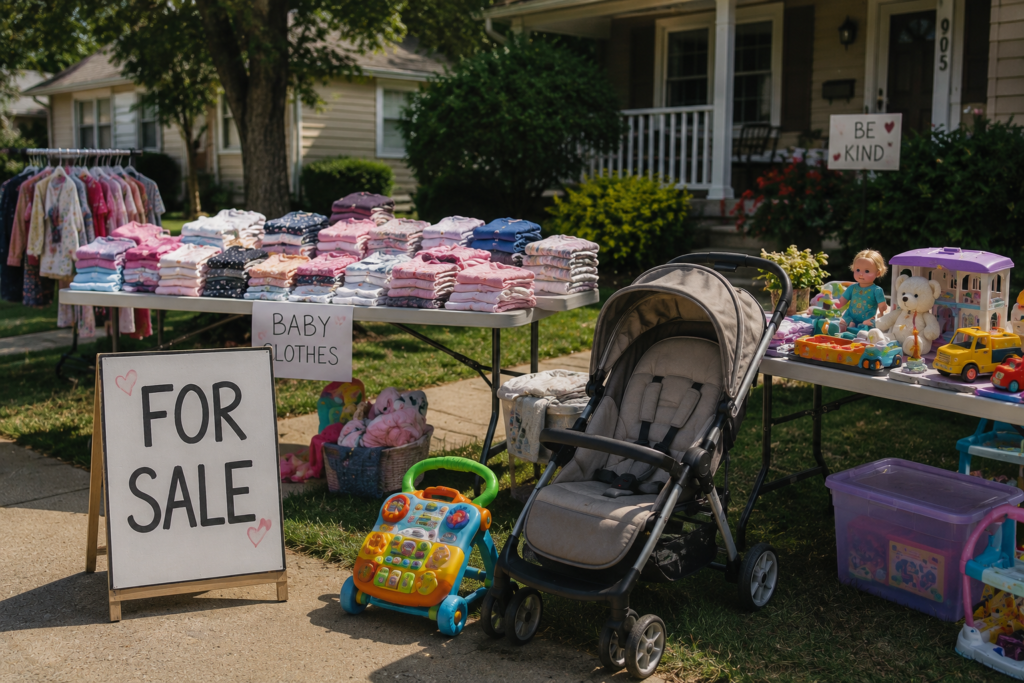
11. Garage Sales and Community Yard Sales
The oldest method still works, especially for clearing out a large volume of items in a single day. Combine baby gear with general household items to attract more foot traffic.
Best for: Low-value items you want gone quickly rather than items you’re trying to maximize profit on.
Best Place to Sell, by Item Type
Not every platform is right for every item. Here’s a faster way to decide, broken down by category.
Strollers
Strollers are bulky, brand-driven, and buyers usually want to inspect the wheels and folding mechanism before paying. Local sale beats shipping almost every time.
- First choice: Facebook Marketplace or Nextdoor (local pickup avoids shipping a large box)
- Second choice: Once Upon A Child, if you want same-day cash and don’t want to manage a listing
Car Seats
Car seats are trust-sensitive — buyers want to know the exact manufacture date, crash history, and expiration date before committing.
- First choice: Local parent Facebook groups, where you can answer buyer questions directly
- Avoid: Shipping car seats through general apps unless the platform explicitly supports them; damage in transit is common and hard to prove
Cribs and Nursery Furniture
Heavy, hard to ship, and subject to the strictest safety rules of any baby category.
- First choice: Facebook Marketplace or Nextdoor for local pickup
- Second choice: A local consignment shop if you’d rather not manage buyer messages and price negotiations yourself
Baby Clothing and Shoes
The highest-volume, easiest-to-ship category — this is where shipping-based apps genuinely shine.
- First choice: Kidizen or Poshmark for name-brand pieces
- Second choice: ThredUp for bulk clean-outs where convenience matters more than maximizing price
- Third choice: Once Upon A Child for instant cash on a full seasonal wardrobe
Feeding and Nursing Items
Bottles, breast pump motors (not the parts that touch milk), high chairs, and bibs.
- First choice: Local Facebook groups or Marketplace for high chairs and larger feeding gear
- Note: Many buyers specifically avoid secondhand items that touched milk or food directly for hygiene reasons — clean thoroughly and say so in your listing
Toys and Books
Low individual value but easy to bundle and sell in bulk.
- First choice: Garage sales or consignment sale events for bulk toy lots
- Second choice: Local Buy Nothing groups if the resale value is too low to bother listing individually
Donating Instead of Selling
Sometimes an item isn’t worth the time it takes to list — a stained onesie, a toy with half its pieces missing, or gear that’s simply too worn to sell. In those cases, donating is usually faster than trying to sell.
- Local Buy Nothing groups on Facebook connect you directly with a neighbor who needs the item, with zero listing effort
- Goodwill and Salvation Army accept baby clothing and non-recalled gear, and donations are typically tax-deductible
- Local shelters and pregnancy resource centers often take diapers, formula, and gently used baby items directly, and many specifically request car seats and cribs for families in need
If an item is recalled or otherwise unsafe, donation centers should refuse it too — safety rules apply whether you’re selling or giving an item away for free.
How to Prepare Baby Items Before You List Them
A little prep work before you post a listing noticeably speeds up the sale.
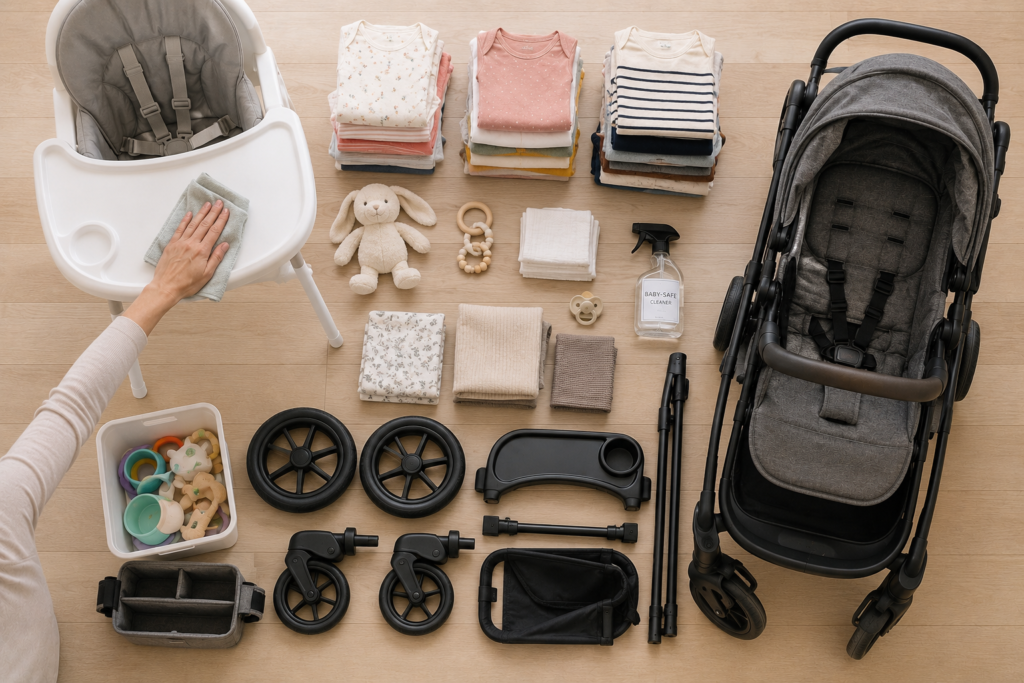
- Wash and dry all fabric items — car seat covers, stroller seat fabric, and clothing all sell faster clean than “as-is”
- Wipe down hard plastic surfaces with a mild soap and water, avoiding harsh chemicals on anything a baby will mouth or touch
- Locate the manual or look up the model number — buyers ask for weight limits, assembly instructions, and compatible accessories constantly
- Gather all original parts — car seat bases, stroller rain covers, high chair trays, and crib hardware all add resale value when included
- Take photos in daylight, from multiple angles, including any wear, stains, or scratches — showing flaws upfront reduces buyer pushback later
- Note the manufacture date printed on a sticker (usually on cribs, car seats, and bassinets), since this is often the first thing serious buyers ask about
What Sells Fastest (and What Doesn’t)
Sells fast:
- Strollers from well-known brands (Uppababy, Nuna, Baby Jogger, Graco)
- Convertible car seats (within expiration date)
- Baby carriers and wraps (Ergobaby, Baby Bjorn, Solly)
- Wooden or convertible cribs in neutral colors
- Gently used name-brand clothing lots by size
Sells slowly or not at all:
- Plastic infant toys with missing parts
- Off-brand gear with no recognizable name
- Heavily stained or worn clothing
- Items missing original hardware or instructions
- Anything close to its recall-check “gray area” — buyers now check recalls themselves before purchasing
How to Price Used Baby Items
A simple rule most experienced resellers use:
- Gear in excellent condition: 40–60% of the original retail price
- Gear in good, used condition: 25–40% of original retail price
- Clothing: $2–$6 per item for basics, $8–$15 for name brands in excellent condition
- Furniture (cribs, dressers): 30–50% of retail, depending on wear and assembly condition
Check completed/sold listings on Facebook Marketplace or Poshmark for the exact item before pricing — this tells you what buyers actually paid recently, not just what other sellers are asking.
Condition matters more than age for most gear, especially when listing items on the best online marketplaces to sell used baby gear. A three-year-old stroller that’s been kept indoors and cleaned regularly will often sell for more than a one-year-old stroller that’s been left in a garage with a torn canopy. When in doubt, price based on what you see in the mirror test: if you’d be embarrassed to hand the item to a friend without explaining its flaws, price it lower and say why upfront.
Seasonal timing affects price too. Snowsuits and heavy sleep sacks sell best in early fall, while swim gear and sun hats sell best in late spring. Listing off-season items usually means a lower price and a longer wait, so timing a sale around the right season can add real value without changing the item at all. To learn how seasonal demand fits into an effective pricing strategy, check out our guide on how to price used baby items for a quick sale.
Tips to Sell Faster
- Clean everything first. Wipe down plastic gear, wash fabric parts, and photograph items after cleaning, not before.
- Use natural light for photos. Outdoor or near-window photos consistently outsell dark indoor shots.
- List the brand and model name. Buyers search by brand (“Uppababy Vista” gets far more views than “stroller”).
- Bundle small items. A “0–3 month newborn bundle” of 15 onesies sells faster than 15 separate listings.
- Mention what’s included. Car seats, strollers, and high chairs often come with extra parts (bases, trays, inserts) — list every piece included.
- Note the manufacture date for cribs and car seats. Buyers will ask, so save time by including it in the listing.
Staying Safe: Avoiding Scams When You Sell
Selling baby items online comes with the same scam risks as any online marketplace sale. The FTC’s consumer guidance on selling online outlines the most common tactics to watch for:
- Overpayment scams — a buyer sends a check for more than your asking price and asks you to refund the difference. The check later bounces.
- Fake payment confirmations — a buyer claims to have paid through a mobile app and shows you a fake screenshot, hoping you’ll hand over the item before checking your actual account balance.
- Verification code requests — never share a code sent to your phone, even if the buyer claims it’s needed to “verify” the sale.
Simple rules that prevent most scams:
- Meet locally and accept cash when possible
- If shipping, use the platform’s built-in payment and shipping system rather than moving the conversation off-app
- Never deposit a check for more than your asking price
- Trust your instincts — if a buyer is pushy about an unusual payment method, walk away
Frequently Asked Questions
Can I sell used baby items on Amazon?
Only through Amazon’s official trade-in or resale programs where available, and mainly for pre-approved categories. For most individual sellers, general marketplaces or dedicated apps like Kidizen are simpler.
Do I need to disclose that an item is used?
Yes. Every major platform requires accurate condition descriptions. Misrepresenting an item’s condition is the fastest way to get negative reviews or account restrictions.
What baby items are banned from resale nationwide?
Recalled products, cribs made before June 2011, drop-side cribs, and expired or crash-involved car seats. Always check the CPSC database before listing.
Is it better to sell locally or ship items?
For furniture and large gear, local sale avoids packaging and shipping costs entirely. For clothing and small accessories, shipping through apps like Poshmark or Kidizen opens your listing to a much larger buyer pool.
How much can I realistically make selling used baby gear?
It depends heavily on brand and condition, but parents commonly recover 30–50% of what they originally spent on strollers, car seats, and furniture when items are in good shape and priced correctly.
Should I sell items individually or as a bundle?
Small, low-value items like onesies, socks, and bibs sell faster as bundles by size and season. Higher-value items like strollers, car seats, and cribs almost always do better listed individually with clear photos and full details.
What if a buyer wants to negotiate the price?
Light negotiation is normal, especially on Facebook Marketplace and OfferUp. Pricing slightly above your minimum acceptable price gives you room to negotiate without losing money on the sale.
Final Thoughts
Selling used baby items is one of the most practical ways to offset the cost of raising a child in the US, and with the number of platforms available in 2026, there’s an option that fits almost any timeline — from same-day cash at a local shop to a wider audience through a shipping-based app.
The one step that shouldn’t be skipped is the recall check. It takes less than a minute and protects both you and the family buying from you.
If you’re also looking to buy gently used gear instead of new, check out our other buying guides, including where to buy used furniture and where to buy used electronics for more city-specific options.
