





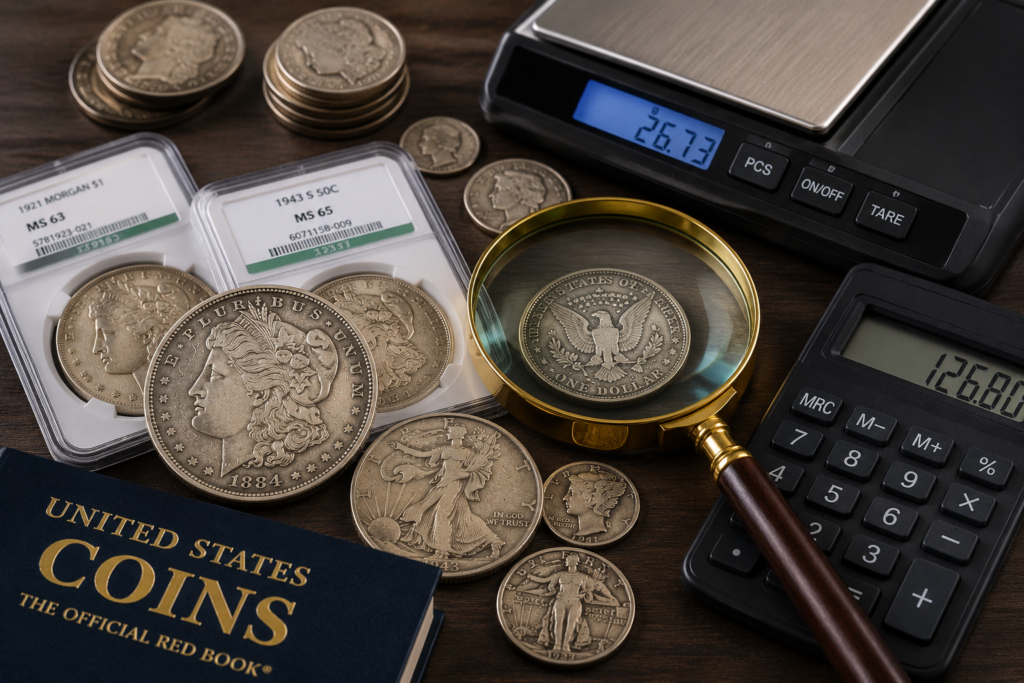
If you’ve found a jar of old coins in a drawer, inherited a collection, or you’re simply cleaning out a closet, the first question is always the same: where to sell rare coins for the best price? The honest answer is that there is no single “best” place. The right marketplace depends on how rare your coins actually are, how much they’re worth, and how quickly you want your money.
This guide breaks down the most reliable online coin buyers and local dealers in the US, how to spot a genuinely valuable coin before you sell, and how to avoid the pricing mistakes that cost collectors real money. It’s part of our Used Items Guide series on getting the most cash for things you no longer need.
What Actually Determines a Coin’s Value
Two coins from the same year can be worth wildly different amounts. Before you dig into individual coins, it helps to understand the five factors dealers and collectors weigh. Once you’ve estimated a coin’s worth, the next step is finding the best place to sell old silver coins for cash to maximize your return.
- Rarity: How many were originally minted, and how many are believed to survive today in collectible condition.
- Condition (grade): Wear, luster, and surface quality, scored on a 1–70 scale by professional graders.
- Collector demand: Some series are simply more popular with collectors, which pushes prices up independent of rarity alone.
- Metal content: Silver and gold coins carry a floor value tied to current spot prices, regardless of collectibility.
- Historical or novelty significance: First-year issues, commemoratives, and coins tied to notable events often sell above what their rarity alone would suggest.
Keep these five factors in mind as you sort your coins—they explain why a worn, common coin might be worth face value while a similar-looking coin from one specific year sells for hundreds of dollars. If you’re ready to sell after identifying your coin’s value, check out our guide on best places to sell old silver coins for cash to compare trusted buyers, online marketplaces, and local dealers.
How to Tell If Your Coins Are Actually Rare or Valuable
Before you contact any buyer, spend ten minutes checking these four things. It will change how you price your coins and who you sell them to.
1. Check the Date and Mint Mark
Look for a small letter near the date — usually D (Denver), S (San Francisco), P (Philadelphia), or no letter at all. Certain year-and-mint combinations, known as “key dates,” are worth far more than the rest of the series. A 1916-D Mercury dime, for example, is worth hundreds of times more than a common-date dime from the same series.
2. Look for Low Mintage or Key Dates
Coins minted in smaller numbers are naturally scarcer. A quick search of the coin’s year, denomination, and mint mark will usually tell you whether it’s a “common date” or a “key date” collectors specifically hunt for.
3. Judge the Condition (Grade)
Condition, or “grade,” affects value more than almost anything else. A coin with sharp details, original luster, and no scratches will sell for far more than the same coin that’s worn smooth or cleaned. Never polish or clean an old coin — it destroys value instantly.
4. Check for Errors or Varieties
Doubled lettering, off-center strikes, and repunched mint marks can turn an ordinary coin into a sought-after error coin. These are easy to miss with the naked eye, so a jeweler’s loupe or macro phone camera helps.
5. Compare Against Recent Sold Prices
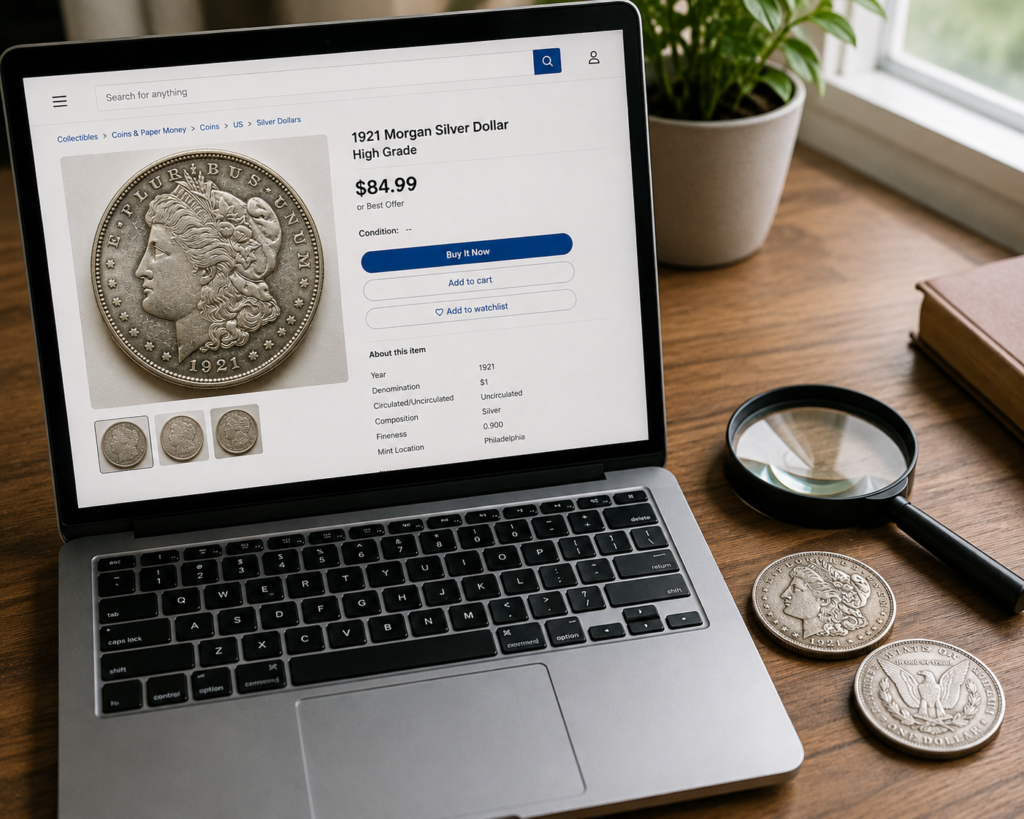
Once you’ve identified the date, mint mark, and approximate condition, search that exact combination in eBay’s sold listings. This single step gives you a realistic price range faster than any other method, and it’s free.
Common Types of Rare US Coins Worth Checking For
You don’t need to be an expert to spot potential value — you just need to know which series regularly turn up surprises. Here are the coins collectors watch for most.
Morgan and Peace Silver Dollars (1878–1935)
Minted from 90% silver, these large dollars carry both metal value and, for certain dates and mints, serious collector premiums. An 1893-S Morgan dollar in decent condition can be worth thousands, while common dates are still worth well above face value in silver content alone.
Indian Head and Wheat Pennies (1859–1958)
Most wheat pennies are worth a few cents to a dollar, but key dates like the 1909-S VDB or 1914-D regularly sell for hundreds of dollars even in worn condition. Indian Head cents from the 1870s and 1880s are scarcer still.
Buffalo Nickels (1913–1938)
Condition matters enormously here, since the date is the first detail to wear away. A well-preserved Buffalo nickel with a full, readable date is worth checking against a price guide before you assume it’s just a common coin.
Mercury Dimes and Walking Liberty Half Dollars (1916–1947)
Both series are popular with collectors for their design and silver content. Full-band Mercury dimes and Walking Liberty halves in high grade routinely bring strong premiums over melt value.
Standing Liberty Quarters (1916–1930)
The first year of this series, 1916, is one of the most valuable regular-issue US coins ever minted, with only a small number struck. Even later dates in top condition attract serious collector interest.
If any of these match what you’re holding, it’s worth a closer look — and worth pricing separately from the rest of your collection rather than lumping everything into one bulk sale.
Best Places to Sell Rare Coins Online
Selling online generally gets you a bigger pool of buyers and, for genuinely rare coins, a better final price than a local shop. Here’s how the main platforms compare.
1. Heritage Auctions
Best for: high-value and certified rare coins.
Heritage is the largest coin and collectibles auction house in the world. If you have a coin worth more than a few hundred dollars — especially anything already graded by PCGS or NGC — consignment here puts it in front of serious collectors and dealers who compete on price. The trade-off is time: auctions take weeks and Heritage takes a seller’s commission.
2. GreatCollections
Best for: certified coins in the $50–$5,000 range.
GreatCollections runs weekly online auctions specifically for graded coins and is known for lower seller fees than the bigger auction houses. It’s a strong middle-ground option if Heritage feels like overkill for your collection.
3. eBay
Best for: common coins, quick sales, and full pricing control.
eBay remains one of the most active marketplaces for collectible coins because buyer demand is constant and you set your own price or auction format. Sold listings also double as free market research — search “sold items” for your exact coin before you list to see what buyers actually paid recently.
4. Facebook Marketplace and Coin Collector Groups
Best for: local, no-fee sales and connecting with hobbyists.
Numismatic Facebook groups are full of active collectors who often pay fair prices without the listing fees of a traditional marketplace. It takes more manual work — posting photos, answering questions, and vetting buyers — but there are no seller fees eating into your total.
5. Specialized Online Coin Dealers
Best for: bullion coins and a guaranteed, fast payout.
Established online bullion and coin dealers will buy directly from you at a set price tied to the current market, then ship you a check or bank transfer once your coins arrive. This is the most convenient option, though offers usually land below what you’d get selling to a collector directly, since the dealer needs margin to resell.
Best Places to Sell Rare Coins Locally
If you’d rather skip shipping and get paid the same day, local options are worth exploring — just know how each one prices your coins.
1. Local Coin Shops
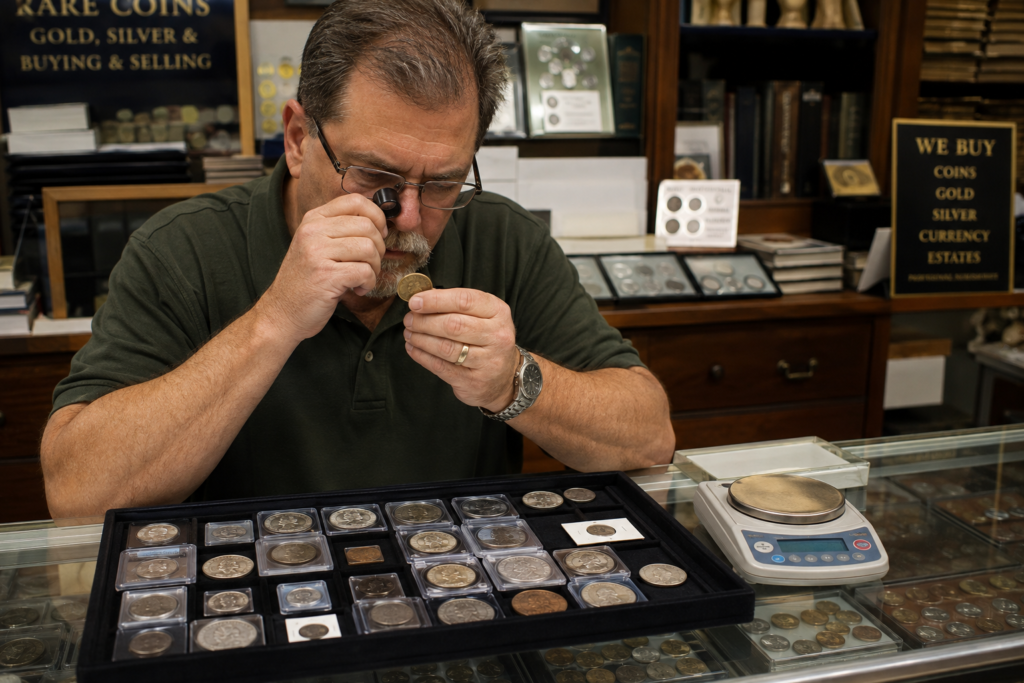
A reputable local coin shop (often shortened to “LCS” in collector forums) is usually the best local option. Dealers here understand numismatic value, not just metal content, so a rare coin is far less likely to be priced as scrap. Visit two or three shops and compare offers before you sell — prices can vary more than you’d expect.
Look for shops that have been open for several years and are willing to explain how they arrived at an offer. A dealer who quickly names a specific price and points to a comparable recent sale is generally more trustworthy than one who gives a vague, take-it-or-leave-it number.
2. Coin Shows and Conventions
Regional coin shows put dozens of dealers under one roof, which means built-in competition for your coins. If a major show is happening near you, it’s often worth the drive, especially for a larger or more valuable collection.
3. Estate and Auction Houses
For a full collection or an inherited estate, a local auction house can handle everything — appraisal, cataloging, and sale — for a percentage of the final price. This suits people who want a hands-off process more than the absolute highest dollar amount.
4. Pawn Shops (Use With Caution)
Pawn shops are fast and convenient, but most staff price coins by metal weight, not rarity or collector demand. A coin worth $300 to a collector might get offered at $20 in melt value. Only use a pawn shop as a last resort, or for coins you’ve already confirmed have no collector premium.
The buy-versus-sell decision matters for any secondhand category, not just coins. If you’re clearing out a house at the same time, our guide on where to sell outdoor furniture walks through the same local-versus-online comparison for bulkier items.
Should You Get Your Coins Graded Before Selling?
Third-party grading seals a coin in a tamper-proof holder with an official condition score, which removes buyer guesswork and usually raises the final sale price. It isn’t necessary for every coin, though.
When Grading Is Worth It
• The coin is a known key date or low-mintage variety
• You suspect it could be worth $150 or more raw (ungraded)
• You plan to sell through an auction house like Heritage or GreatCollections
• The coin shows a possible mint error or variety that needs authentication
When to Skip Grading
• The coin is a common date, worth mostly its metal content
• Grading fees ($20–$50+ per coin, plus shipping) would eat most of the coin’s value
The two most trusted grading services in the US are PCGS and NGC. Both publish population reports and price guides, so you can research a coin’s grade and market value before deciding whether grading fees make sense.
For a broader introduction to how coins are classified and valued, the American Numismatic Association offers free educational resources for new collectors and sellers alike, including how to read mint marks and identify common counterfeits.
How to Get the Best Price When Selling Rare Coins
Research Before You List or Visit a Dealer
Check recently sold listings (not just current asking prices) on eBay and price guides from PCGS or NGC. This gives you a realistic price range so you know if an offer is fair.
Get Multiple Offers
Never accept the first offer, whether it’s online or in person. Comparing two or three offers — even just calling two local shops — routinely turns up a meaningfully higher price.
Sell in the Right Format for the Coin’s Value
• Under $50: eBay or a local shop for convenience
• $50–$500: GreatCollections or a specialized online dealer
• $500+: Heritage Auctions or a reputable local dealer with an established buyer network
Take Clear, Honest Photos
Photograph both sides in natural light, and be upfront about scratches, cleaning, or damage. Buyers pay more when they trust the listing, and misrepresented condition leads to returns and disputes.
Silver coins deserve a special mention here, since they carry both a metal (melt) value and a separate collector value. If part of your collection is pre-1965 US silver, our dedicated guide, Best Places to Sell Old Silver Coins for Cash, breaks down how to tell the two apart so you don’t sell a collectible coin for scrap price.
Common Mistakes and Scams to Avoid
Cleaning or Polishing Coins
It feels intuitive to make an old coin shine, but cleaning strips the original surface and can cut a coin’s value by half or more. Leave coins exactly as you found them.
Selling to the First Cash-for-Gold Ad You See
Mail-in “cash for gold and silver” services almost always pay melt value, with no allowance for rarity or collector demand. Fine for confirmed junk silver, risky for anything you haven’t checked first.
Skipping Verification on Local Buyers
Before meeting a stranger from an online listing, choose a public location — many local police stations offer a monitored spot for exactly this kind of exchange — and confirm payment method in advance.
Shipping Valuable Coins Without Insurance
If you’re mailing coins to an auction house or grading service, always use a trackable, insured shipping method. The small extra cost is minor compared to the risk of an uninsured package going missing.
Trusting an Offer Without a Second Opinion
A single “expert” opinion, especially unsolicited, is not verification. Cross-check any offer against PCGS or NGC price guides, or recent eBay sold listings, before agreeing to a sale.
Frequently Asked Questions
What is the best place to sell rare coins for the most money?
For genuinely rare or certified coins, auction houses like Heritage Auctions or GreatCollections typically bring the highest prices because they reach competing collectors directly. For common coins, eBay or a local dealer is usually faster and just as fair.
How do I find coin dealers near me?
Search “coin dealers near me” and check reviews, or look for members of the American Numismatic Association, which maintains standards for member dealers. Visiting two or three shops in person lets you compare offers before you commit.
Do I need to clean my coins before selling them?
No. Cleaning almost always reduces a coin’s value. Sell coins exactly as you found them and let a dealer or grading service assess the original surface.
Is it better to sell coins online or locally?
Online generally reaches more buyers and can bring a higher price for rare coins, while local sales are faster and avoid shipping insurance costs. Many sellers use both: research prices online, then sell locally if the offer matches.
How much does coin grading cost?
PCGS and NGC grading fees typically start around $20–$50 per coin depending on the service tier and coin value, plus return shipping and insurance. It’s usually only worth it for coins you believe are worth well above that cost.
Can I sell rare coins to a bank?
No. Banks will only accept coins at face value, regardless of rarity or metal content, so a valuable coin would be treated the same as ordinary pocket change. Always sell to a dealer, auction house, or collector instead.
What should I do if I inherited a large coin collection?
Resist the urge to sell quickly. Sort the collection first, set aside anything that looks old, silver, or unusual, and consider a paid appraisal from a local coin shop or an ANA-affiliated dealer before selling — especially if the collection includes coins you can’t identify.
A Simple Step-by-Step Process for Selling Rare Coins
If this is your first time selling, follow this order rather than jumping straight to a dealer.
• Sort your coins by type, date, and mint mark, separating anything that looks unusual, old, or silver-colored from modern pocket change.
• Research each coin using its date, mint mark, and denomination to check whether it’s a common date or a key date.
• Check recent sold prices on eBay and reference guides from PCGS or NGC for anything that looks potentially valuable.
• Decide on grading for coins likely worth more than $150–200 raw.
• Get 2–3 offers — a mix of online and local — before accepting anything.
• Sell in batches by value tier: bulk/common coins together, and key dates or graded coins individually for the best exposure.
Timing Your Sale
Silver and gold coin values move with precious metal spot prices, so if a meaningful share of your collection’s value comes from metal content, it’s worth glancing at current spot prices before you sell rather than assuming last year’s numbers still apply. Numismatic (collector) value, on the other hand, tends to be far more stable and less tied to daily market swings.
Final Thoughts
Selling rare coins pays off when you slow down before the sale: identify what you actually have, get a second opinion on anything that looks unusual, and match the coin’s value to the right marketplace. A common wheat penny doesn’t need an auction house, and a genuine key-date rarity shouldn’t end up in a pawn shop’s melt-value bin.
Whether you end up selling on eBay, through a local dealer, or by consigning to an auction house, the extra hour you spend researching before that first offer is almost always the difference between an average sale and a genuinely good one.
Coins aren’t the only category where a little research changes the payout. Browse more of our selling guides on Used Items Guide, including our breakdown of where to sell used baby items, for the same city-by-city, platform-by-platform approach.
