








That box of your grandmother’s dishes in the attic, the mid-century dresser taking up garage space, the leather jacket you haven’t worn since college — vintage items sitting around your house are often worth real money. The hard part isn’t deciding to sell. It’s figuring out where to sell vintage items so you actually get a fair price instead of a lowball offer.
This guide is part of our broader Used Items Guide hub on buying and selling secondhand goods across the US. Below, we break down every major vintage category and match it to the marketplaces, shops, and local options that consistently pay closer to fair value — plus how to prepare and price your items before you list a single thing.
Best Places to Sell Vintage Items at a Glance
Every vintage category has a handful of platforms that consistently outperform the rest. Here’s the short version before we go deeper.
| Vintage Item Type | Best Places to Sell |
| Furniture | Facebook Marketplace, Chairish, local consignment shops |
| Clothing & accessories | Poshmark, Depop, local vintage boutiques |
| Jewelry & watches | Chrono24, local jewelers, appraised private sale |
| Home décor & kitchenware | Etsy, Ruby Lane, antique malls |
| Electronics, cameras & audio | eBay, enthusiast forums |
| Collectibles, toys & memorabilia | eBay, specialty resellers, auction houses |
| Rare or high-value pieces | Auction houses, estate sale companies |
Read on for the full breakdown, plus exactly how to prepare and price your vintage items before you list them anywhere.
What Counts as “Vintage”? A Quick Definition
Before you pick a platform, it helps to know which bucket your item falls into, since some marketplaces only accept items that meet a specific age cutoff.
● Vintage: generally items 20 to 99 years old, valued for style, era, or craftsmanship
● Antique: items 100 years or older
● Retro: newer items styled to look old, not necessarily old themselves
Etsy, for example, requires items listed as “vintage” to be at least 20 years old. Knowing which category your item fits keeps you from getting a listing rejected or a buyer disputing your description later.
How to Know If Your Vintage Item Is Actually Worth Selling
Not everything old is valuable, and not everything valuable looks old. A few factors decide whether an item is worth your time to list.
● Age and era: certain decades and design movements (mid-century modern, Art Deco, 1970s) currently have stronger buyer demand than others
● Rarity: limited production runs, discontinued patterns, or short-lived brands push prices up
● Condition: original finish, intact hardware, and minimal damage matter more than most sellers expect
● Maker or brand: a recognizable maker’s mark, designer signature, or manufacturer logo can multiply value
● Current demand: even a genuinely old item is only worth what an active buyer pool will pay today
Don’t estimate value from asking prices — anyone can list an item for whatever they hope to get. Instead, check sold and completed listings on a marketplace like eBay, which shows what buyers actually paid rather than what a seller wished for. For anything you suspect is genuinely valuable, cross-reference it against a dedicated price-research archive like WorthPoint, which catalogs millions of past sale prices across vintage and antique categories.
Signs an Item Deserves a Closer Look
Some quick red flags — or rather, green flags — that a piece is worth researching properly before you price it low or hand it off cheaply:
● A maker’s mark, stamp, or label you don’t immediately recognize
● Materials that feel heavier, denser, or higher quality than typical mass-market pieces
● Construction details like dovetail joints, hand-stitching, or hallmark stamps on jewelry
● An item that shows up repeatedly in vintage collector forums or Pinterest boards under a specific name
● Family history suggesting the piece was purchased somewhere unusual, imported, or handed down through generations
None of these guarantee high value on their own, but any one of them is a reason to spend fifteen extra minutes researching before you list.
How to Prepare Your Vintage Items Before You Sell
A little prep work before you contact a single buyer usually raises your final offer and speeds up the whole process.
Research Before You List Anything
● Search sold listings for the exact item, or the closest match you can find
● Look up maker’s marks, stamps, labels, or signatures using a reverse image search
● Note anything unusual: a misprint, a limited edition marking, or an early production run
Resist the Urge to Clean or Restore
● Avoid stripping, repainting, or heavily polishing an item before selling
● Original patina, finish, and wear are often what collectors are paying for
● A light dusting or gentle wipe-down is usually all that’s needed
Photograph and Document Properly
● Take clear, well-lit photos from multiple angles, including any maker’s marks or damage
● Photograph the item’s underside, interior tags, and any accompanying paperwork
● Note what you know about its history: where you got it, roughly when, and any family or purchase history
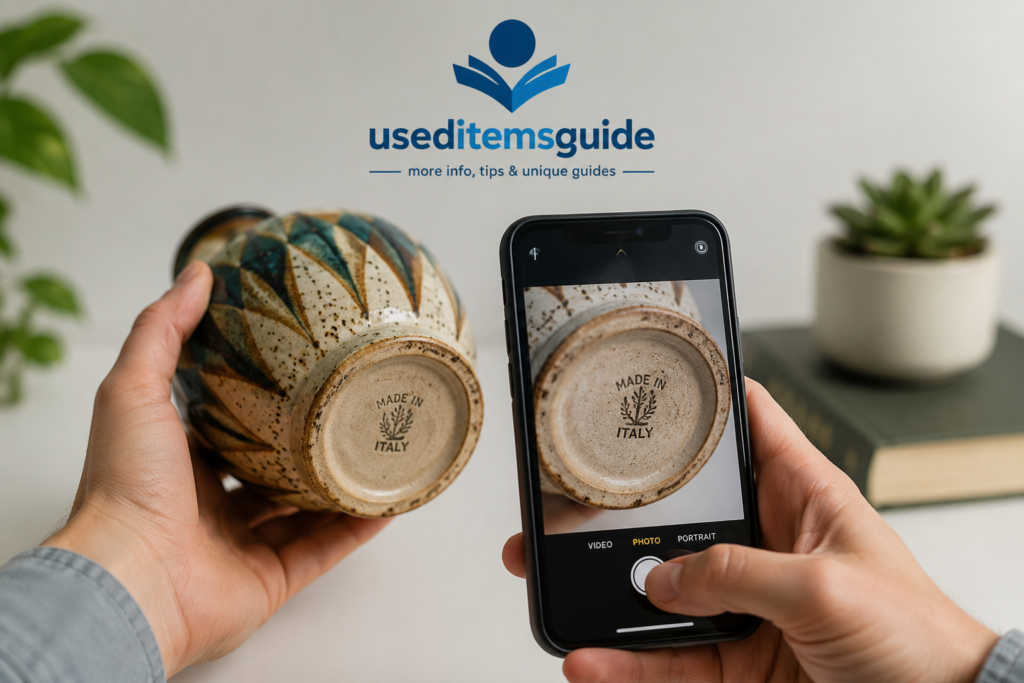
This documentation lets you request comparable quotes from multiple buyers at once, and it protects you if a dispute comes up after a sale.
Best General Marketplaces to Sell Vintage Items
These platforms work across nearly every vintage category, making them a solid starting point no matter what you’re selling.
eBay
The largest general marketplace for vintage goods in the US. eBay supports auction-style and fixed-price listings, has a massive buyer base actively searching for specific vintage items, and its sold-listings data doubles as a free pricing tool.
Etsy
A strong fit if your item is genuinely vintage (20-plus years old) and has aesthetic or curated appeal. Etsy buyers tend to browse for style and story rather than bargain-hunt, which often works in a seller’s favor for decorative pieces.
Facebook Marketplace & Local Vintage Groups
Best for local, no-shipping sales and for bulky or fragile items like furniture. Local vintage and antique collector groups also let buyers inspect an item in person before paying, which builds trust for both sides.
Chairish and Ruby Lane
Curated marketplaces built specifically for vintage furniture, décor, and higher-end antiques. Chairish focuses heavily on furniture and home goods, while Ruby Lane caters to a broader range of antiques and collectibles. Listing fees run higher than eBay or Etsy, but the buyer base is pre-qualified for serious purchases.
Poshmark, thredUP & Depop
The go-to platforms if your vintage item is clothing or accessories rather than furniture or décor. These apps have buyer bases specifically shopping for vintage fashion, which usually beats listing clothing on a general marketplace.
Selling by Vintage Item Category
General marketplaces work for almost anything, but matching your item to a specialized platform or buyer almost always nets a better price.
Vintage Furniture
Furniture is one of the trickiest categories to ship, so local and regional sales channels tend to work best.
● Facebook Marketplace and local vintage groups — best for large pieces buyers need to inspect and pick up in person
● Chairish — strong for design-forward or branded mid-century pieces
● Consignment furniture shops — handle staging and buyer traffic for a commission
If part of your collection includes patio or garden furniture, our dedicated guide on best places to sell outdoor furniture walks through platforms and pricing specific to that category.
A few extra pointers that consistently help furniture sell faster:
● List measurements clearly, since buyers can’t judge scale from photos alone
● Mention the material (solid wood versus veneer) up front, since it directly affects price
● Note any structural issues honestly — a wobbly leg or water ring is far less of a dealbreaker than buyers finding it after pickup
Vintage Clothing & Accessories
● Poshmark — strong community of vintage fashion buyers and easy shipping tools
● Depop — younger buyer base, especially strong for 90s and Y2K-era pieces
● Local vintage consignment boutiques — good for designer pieces that benefit from in-person authentication
Vintage Jewelry & Watches
● Get an independent appraisal before selling anything with gold, silver, or gemstones, since melt value alone often understates true worth
● Chrono24 for vintage and pre-owned watches, with built-in buyer protection for higher-value pieces
● Local jewelers frequently buy outright, though offers usually sit below private-sale value
● Check hallmarks and stamps carefully — a small maker’s mark inside a ring band or on the back of a brooch can identify a specific designer or era, which often changes the price significantly
● Costume jewelry with a recognizable designer name (even without precious metals) can outsell plain gold pieces by weight, so don’t assume non-precious jewelry is worth less
Vintage Home Décor & Kitchenware
● Etsy for curated, aesthetic-driven décor buyers
● Ruby Lane for higher-end glassware, china, and decorative antiques
● Estate sales and local antique malls for everyday vintage kitchenware that’s harder to ship
Vintage Electronics, Cameras & Audio
● eBay remains the strongest option for reach and buyer familiarity with tested, working condition
● Specialty forums and enthusiast communities for turntables, film cameras, and vintage audio equipment often pay more than general marketplaces, since buyers there understand exact model value
● Always disclose working condition clearly — vintage electronics buyers specifically search for tested, functional units
Vintage Collectibles, Toys & Memorabilia
If part of what you’re selling includes coins, trading cards, toys, or sports memorabilia rather than furniture or clothing, our complete guide on where to sell collectibles breaks down the best platform for each specific type, including auction houses and grading services.
How to Ship Vintage Items Safely
Shipping is where a lot of vintage sales go wrong, since fragile, oddly shaped, or heavy items need more care than standard packages.
● Use double-boxing for anything fragile: an inner box with cushioning, placed inside a slightly larger outer box with more cushioning around it
● Wrap glass, ceramics, and framed items individually, and keep at least two inches of padding between the item and every box wall
● Photograph the item packed and unpacked, in case you need proof of condition for an insurance claim
● Insure high-value shipments separately rather than relying on a marketplace’s default coverage, which often caps out well below an item’s actual worth
● For furniture too large to ship standard parcel, look into freight shipping services or restrict the sale to local pickup only
Skipping proper packaging is one of the most common reasons a vintage sale ends in a dispute, so it’s worth the extra ten minutes and a few dollars in materials.
Auction Houses: When a Vintage Piece Is Worth Going Big

For a genuinely rare, documented, or high-value vintage piece, an auction house often outperforms any marketplace listing.
● Best for: documented rarities, designer-attributed furniture, and full collections with real provenance
● Trade-off: consignment fees typically run 10 to 20 percent of the final sale price
● Timeline: auctions run on a fixed schedule, so expect weeks or months rather than an instant sale
If a local dealer or appraiser flags an item as a recognized maker’s piece or a documented rarity, ask specifically whether it belongs in an auction rather than a direct sale. That question alone can be worth a meaningful jump in final price.
Selling Locally: Vintage Malls, Consignment & Estate Sales
Not every vintage item needs to ship across the country to sell well. Local options remain some of the fastest ways to turn a piece into cash.
Vintage & Antique Malls
You rent a booth or shelf space and set your own prices, while mall staff handle the actual transaction for a commission. This works well if you have a steady volume of vintage items to move over time.
Consignment Shops
Specialty consignment shops for vintage clothing, furniture, or décor handle staging, pricing guidance, and the sale itself, usually without any upfront effort from you.
Estate Sale Companies
The right choice for liquidating an entire household’s worth of vintage items at once. Estate sale professionals price, stage, and sell everything over a weekend, typically for a percentage of total sales.
Flea Markets and Collector Shows
Good for everyday vintage items and direct, same-day cash sales, especially for sellers who enjoy negotiating in person.
How to Price Vintage Items Correctly
Getting the price right before you list saves time and prevents both underselling and scaring off buyers with an unrealistic ask.
● Search sold and completed listings for the exact item, or the closest comparable piece
● Factor in shipping cost and platform fees before settling on a listing price, since a high asking price can still net less after fees
● Price slightly above your target on marketplaces and local sales to leave room for negotiation
● Recheck pricing periodically, since vintage values shift with design trends and seasonal demand
Serious vintage sellers often track resale trends the same way investors watch a market index — checking prices regularly rather than relying on a single snapshot months old. If that kind of ongoing price-tracking habit is new to you, our breakdown of FintechZoom’s S&P 500 tracking tools walks through how real-time market monitoring works, a useful mental model for watching price movement in any resale market, vintage goods included.
Best Time of Year to Sell Vintage Items
Timing can move your final price almost as much as the item’s actual condition.
● Spring and early fall tend to bring the highest general resale traffic, as buyers refresh home décor between seasons
● Holiday-adjacent items — vintage ornaments, barware, and gift-style pieces — sell faster and for more in the weeks before major holidays
● Trend-driven pieces tied to a design movement currently in style (think mid-century modern or Art Deco) often peak shortly after media coverage or influencer attention, then cool off
● Genuinely rare pieces hold value through short-term dips, so there’s rarely a reason to rush a sale on a documented rarity
Tips to Get the Best Price and Avoid Scams
● Always get two or three quotes before accepting an offer, especially for anything possibly rare or designer-attributed
● Use a payment method with buyer protection, such as a marketplace’s built-in checkout, rather than a direct bank transfer
● For local sales, meet in a public place, or ask about a police department’s designated safe-exchange zone if one is available nearby
● Photograph condition and any maker’s marks before shipping, so you have proof if a dispute comes up later
● Be cautious of buyers who push urgency or try to move the conversation off-platform immediately
Common Mistakes to Avoid When Selling Vintage Items
● Over-cleaning or restoring an item before selling, which often strips original patina and lowers value instead of raising it
● Assuming age alone means value, when rarity, condition, and current demand matter far more than how old something is
● Skipping research on maker’s marks or labels that could significantly change an item’s category and price
● Accepting the first offer without checking sold comps first
● Ignoring platform and shipping fees, which can turn an apparently higher offer into a lower net payout once costs are subtracted
Frequently Asked Questions
What is the best place to sell vintage items online?
It depends on the category. eBay offers the broadest reach across nearly every type of vintage item, while specialized platforms like Chairish for furniture or Poshmark for clothing typically get better prices within their specific niche.
How do I know if my vintage item is actually valuable?
Check recent sold listings for the same or a similar item, and cross-reference anything unusual against a price-research database. Rarity, condition, maker, and current demand matter far more than age alone.
Should I clean my vintage item before selling it?
Generally no, beyond a light dusting. Cleaning, polishing, or repainting often removes the original finish or patina that collectors are specifically paying for, which can lower rather than raise the sale price.
Is it better to sell vintage items locally or ship them?
Small, durable, or high-value items usually do better shipped through eBay, Etsy, or a specialty platform, since you reach a much larger buyer pool. Bulky or fragile items, like furniture, tend to sell faster and safer through local options such as Facebook Marketplace or an estate sale.
Do I need an appraisal before selling a vintage item?
Only if you suspect it’s genuinely rare, designer-attributed, or made from precious materials. Appraisal fees can outweigh the value they add on common items, but they’re usually worth it for anything you believe could be a documented rarity.
What’s the safest way to sell vintage items locally?
Meet in a well-lit public place, bring a friend if possible, and use a payment method that can’t be reversed after you hand over the item, such as cash counted on the spot.
Do I have to pay taxes on vintage items I sell?
In the US, profit from selling an item for more than you originally paid can be taxable as a capital gain. Keep records of your purchase price and sale price, and check current IRS guidance or consult a tax professional for anything sold at a significant profit.
How long does it typically take to sell a vintage item?
It varies by platform and item. Marketplace listings for common items can sell within days, while auction house consignments for rare pieces can take weeks or months due to fixed auction schedules.
What’s the difference between selling to a dealer and selling through a marketplace?
A dealer or shop gives you a fast, guaranteed cash offer but typically pays below top market value, since they need room to resell at a profit. A marketplace listing usually takes longer to sell but lets you set your own price and reach a much wider pool of buyers directly.
Can I sell a vintage item that has minor damage or missing parts?
Yes, but disclose the damage clearly in your listing rather than letting a buyer discover it after purchase. Many collectors specifically look for damaged or incomplete pieces to restore, and honest listings consistently sell faster than ones that later need a refund or dispute resolved.
Is it worth getting multiple items in a collection appraised individually?
For a mixed collection, it’s usually more efficient to sort items by rough value first, then only pay for individual appraisals on pieces that look genuinely rare or high-value after your own research. Appraising every single item in a large household collection rarely pays for itself.
Final Thoughts
Selling vintage items well comes down to matching each piece to the right buyer pool. General marketplaces work for common, easy-to-ship items, specialized platforms consistently pay more within their niche, and local options remain the fastest route for anything bulky or fragile.
Take the time to research sold prices before you list anything, and resist the urge to clean up a piece before you know what it’s actually worth. Explore more of Used Items Guide for category-specific resale advice, including our detailed guides on where to sell collectibles and best places to sell outdoor furniture.
