
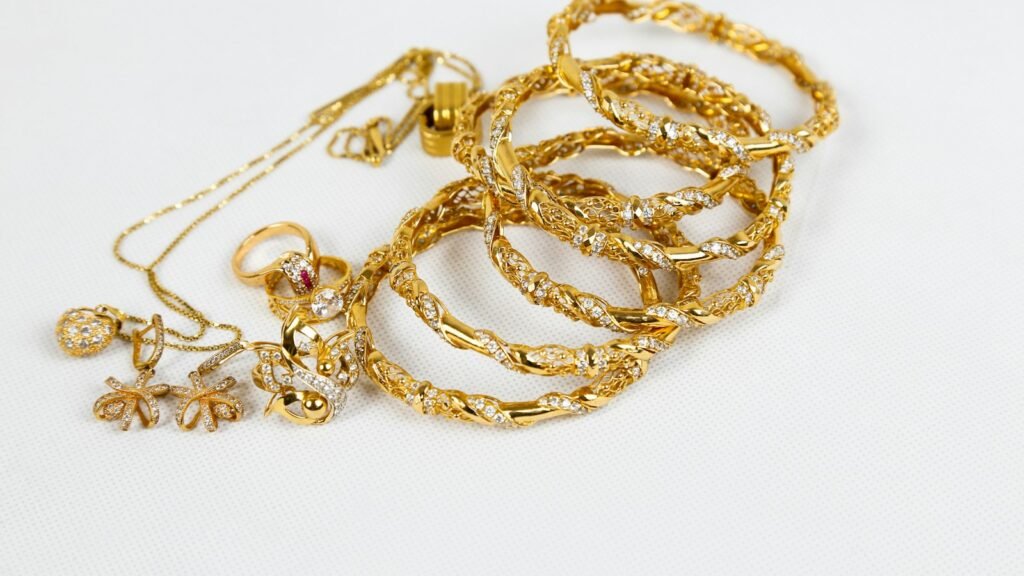
Old chains, a single earring, a class ring from decades ago, a broken bracelet: if it’s real gold, it has value, even if you’d never wear it again. With gold prices still high by historical standards, many Americans are cashing in jewelry they’ve had tucked away for years. But where you sell makes a big difference. Two buyers can look at the same ring and make offers hundreds of dollars apart.
This guide explains where to sell gold jewelry for the most money, how to figure out what your gold is worth before you walk in, how each type of buyer sets prices, and the mistakes that cost sellers the most. If you also have old coins, see our guide to the best places to sell old silver coins.
Key Takeaways
- Your gold’s value depends on three things: the current spot price, the karat (purity) and the weight.
- Get quotes from at least three buyers on the same day; offers for the same piece can vary widely.
- Local coin dealers, jewelers and pawn shops pay quickly; reputable online buyers can be competitive but take longer.
- Designer, antique or gemstone pieces may be worth more as jewelry than as scrap, so get them appraised first.
- An offer of around half the metal’s value is a red flag. Walk away and compare.
Table of Contents
How to Figure Out What Your Gold Is Worth
Before you visit any buyer, do a quick calculation at home. It takes ten minutes and protects you from lowball offers.
Step 1: Find the Karat Stamp
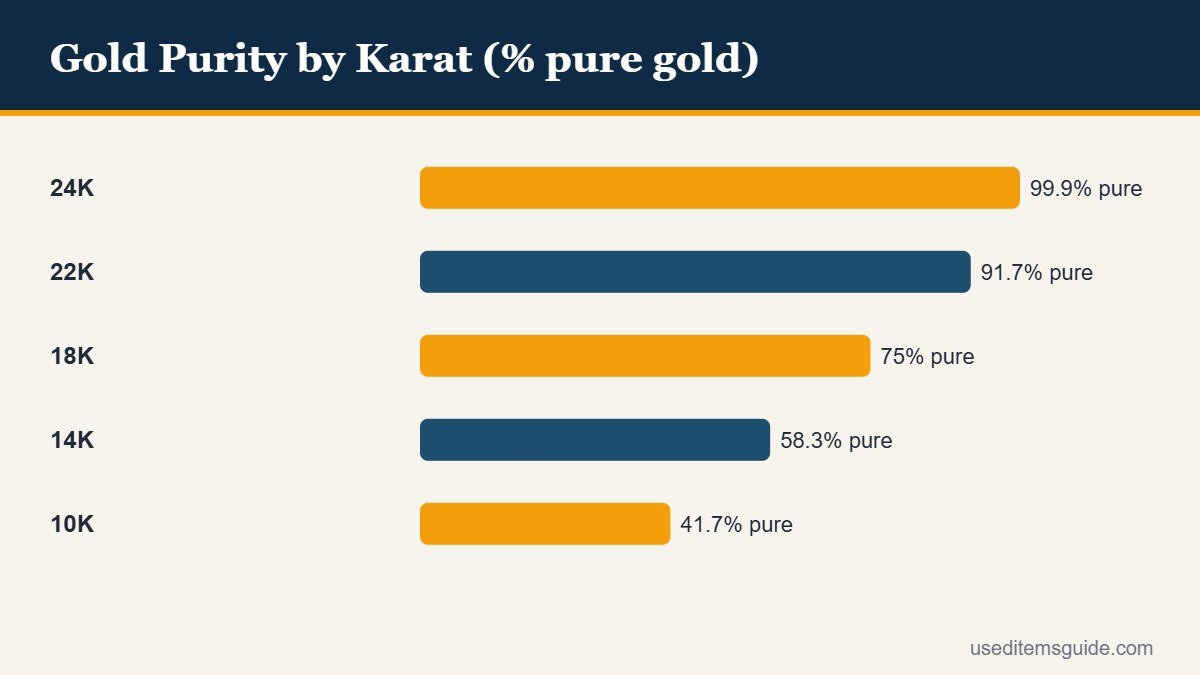
Most gold jewelry is stamped with its purity, usually inside a ring band or near a clasp. You may need a magnifying glass to read it. Karat tells you how much of the piece is actually gold; the rest is other metals added for strength.
| Karat Stamp | Also Marked As | Gold Content |
|---|---|---|
| 24K | 999 | About 99.9% gold |
| 22K | 916 or 917 | About 91.7% gold |
| 18K | 750 | 75% gold |
| 14K | 585 | 58.3% gold |
| 10K | 417 | 41.7% gold |
Marks like GF (gold filled), GP (gold plated), HGE (heavy gold electroplate) or RGP (rolled gold plate) mean the item is only coated in gold and has little or no scrap value.
Step 2: Weigh It in Grams
Gold is priced by the troy ounce, which equals about 31.1 grams. A small digital kitchen or jewelry scale will give you a good estimate. Some buyers use pennyweight (dwt), where 1 dwt is about 1.555 grams. Weigh pieces of the same karat together, since buyers will group them that way.
Step 3: Check Today’s Spot Price
The spot price is the current market price of pure gold, and it changes throughout the day. Check a live source like Kitco or a major bullion dealer right before you sell. In mid-November 2026, gold traded roughly between $3,700 and $4,000 per ounce, but always use the price on the day you sell.
Step 4: Calculate the Melt Value
Use this simple formula:
Example: You have 10 grams of 14K gold, and the spot price is $3,800 per ounce. That’s $3,800 ÷ 31.1 = about $122 per gram of pure gold. Multiply by 0.583 (14K purity) = about $71 per gram. So 10 grams of 14K gold has a melt value of about $710.
No buyer will pay the full melt value, because they need to cover refining costs and make a profit. But knowing this number lets you judge offers. If someone offers $350 for that $710 of gold, you know to keep shopping.
Best Places to Sell Gold Jewelry
1. Local Coin Shops and Bullion Dealers
Coin and bullion dealers buy precious metals every day and usually price based on the live spot price, which makes their offers easy to compare. They tend to be transparent about how they calculate payouts, and you leave with payment the same day. Many also buy coins, so they’re a good stop if you have a mix of jewelry and old coins. Learn how to check silver coin value before you go.
Best for: Scrap gold, broken jewelry and mixed gold and coins.
2. Local Jewelers
Many jewelry stores buy gold, and some will offer more if you take the payout as store credit toward a new purchase. Jewelers are also the right place to ask whether a piece has value beyond its metal, such as a signed designer item or one with quality stones.
Best for: Pieces you might trade toward new jewelry, and getting a second opinion on fine jewelry.
3. Pawn Shops
Pawn shops are often assumed to pay the least, but that isn’t always true for gold. Many work directly with refineries, which can let them make competitive offers. In one AARP writer’s experience, a local pawn shop paid more than other nearby buyers for her gold, silver and platinum. The lesson: include a pawn shop in your comparison, but don’t assume it’s the best or worst offer.
Best for: Fast cash and quick comparisons.
4. Reputable Online Gold Buyers
Online buyers send you a shipping kit, test your items when they arrive and make an offer, usually paying by check, direct deposit or PayPal. Some large bullion dealers also run “old gold” programs for jewelry. Online can be competitive, but you can’t see the testing, and you’ll wait longer for your money.
If you sell online, check the company’s reviews and Better Business Bureau rating, confirm you can reject the offer and get your items back free, photograph and weigh everything before shipping, and send items fully insured. AARP notes that USPS Registered Mail includes insurance and requires a signature.
Best for: People without good local buyers, or those selling larger amounts who want another quote.
5. Estate Jewelry Buyers and Auction Houses
For antique, vintage, signed designer or high-quality gemstone jewelry, estate buyers and auction houses can pay far more than scrap value because they resell the piece as jewelry. Expect commissions or longer timelines, but the difference can be significant for the right piece.
Best for: Antique, designer (such as Tiffany or Cartier) and important gemstone pieces.
6. Online Marketplaces (eBay, Etsy)
If your piece is attractive and wearable, selling it as jewelry to another person can beat a scrap offer. eBay works for brand-name and vintage pieces; Etsy suits vintage jewelry at least 20 years old. You’ll pay fees and handle shipping and buyer questions, so this works best for pieces with style or brand value. See our guide to selling vintage items.
Best for: Wearable, attractive or collectible pieces.
Places to Be Careful
- Temporary “gold buying” events in hotels or pop-up locations, which may disappear before you can follow up on a problem.
- Mail-in offers with unclear terms, especially those that don’t guarantee the return of your items if you decline.
- Buyers who won’t tell you the karat, weight or price per gram they used to calculate their offer.
Comparison: Which Gold Buyer Pays the Most?
| Buyer | Payment Speed | Pros | Cons |
|---|---|---|---|
| Coin/bullion dealer | Same day | Transparent spot-based pricing; buys coins too | Pays scrap value only |
| Jeweler | Same day | Can spot valuable pieces; store-credit bonus possible | Offers vary widely |
| Pawn shop | Same day | Fast; sometimes surprisingly competitive | Some offers are low |
| Online gold buyer | Several days to weeks | Convenient; can be competitive | Shipping risk; can’t watch testing |
| Estate buyer / auction | Weeks | Pays for design, age and stones | Commission and longer timeline |
| eBay / Etsy | After sale | Can beat scrap value for wearable pieces | Fees, shipping and effort |
There’s no single buyer who always pays the most. The only reliable way to get the best price is to compare several offers for the same items on the same day.
How to Sell Gold Jewelry Step by Step
- Gather and sort. Collect all your gold and separate it by karat stamp. Set aside anything marked as plated or filled.
- Pull out special pieces. Anything antique, signed by a designer or set with large stones should be appraised as jewelry before you consider scrap.
- Weigh each group. Record the grams for each karat group, and take photos of every piece.
- Calculate melt value. Use the day’s spot price and the formula above so you know roughly what your gold is worth.
- Get three or more quotes the same day. Gold prices move daily, so comparing offers from different days isn’t apples to apples. Call ahead to confirm each shop buys gold jewelry.
- Ask how each offer was calculated. A reputable buyer will tell you the weight, karat and price per gram they used.
- Bring ID. Many states require precious-metal buyers to record a seller’s identification.
- Get a receipt. Keep a written record showing the items, weights and amount paid.
Scrap Value vs. Jewelry Value: What About Diamonds and Gemstones?
Most gold buyers pay for the metal only. If a ring has a diamond or other stone, a scrap buyer may pay little or nothing extra for it. Before selling:
- Ask whether the buyer will pay separately for stones, or remove them and return them to you.
- Get larger diamonds and gemstones appraised by an independent appraiser, ideally one who isn’t also making an offer to buy.
- Consider selling high-quality stones or designer pieces through a jeweler, estate buyer or auction instead.
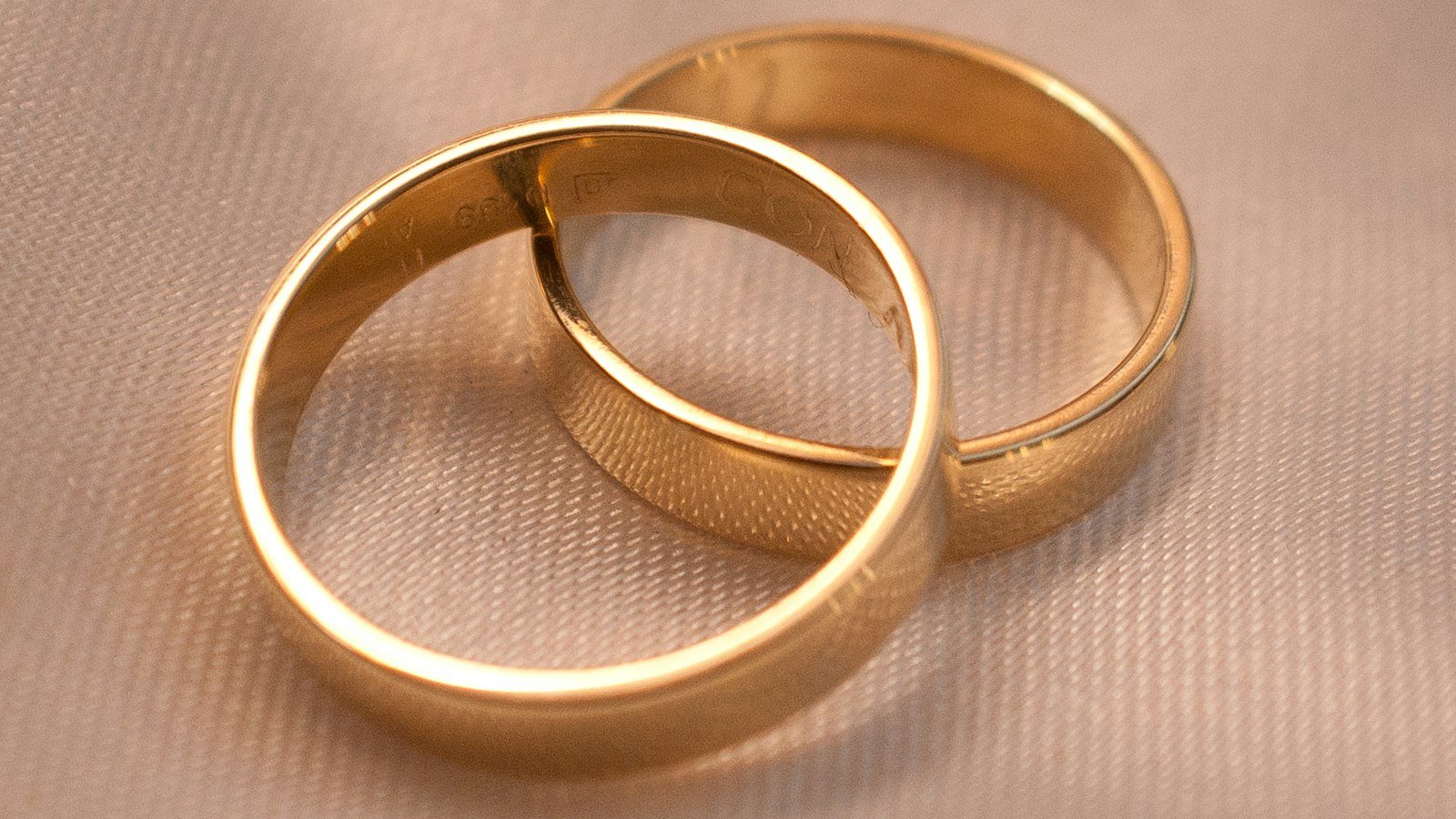
Plain gold items, such as wedding bands, chains without designer markings and broken pieces, are almost always valued by karat and weight, so scrap buyers are the right fit for those.
Mistakes That Cost Gold Sellers Money
- Not knowing the spot price. Without it, you have no way to judge an offer.
- Taking the first offer. One quote tells you almost nothing. Three or more on the same day shows you the real market.
- Mixing karats. If 10K and 18K pieces are weighed together, you may be paid the lower rate for all of it.
- Selling designer or antique pieces for scrap. A signed vintage piece can be worth far more as jewelry.
- Shipping without insurance or records. Always photograph, weigh and insure items before mailing them.
- Rushing because of a “today only” offer. Reputable buyers don’t need high-pressure tactics.
Is Now a Good Time to Sell Gold Jewelry?
Gold prices have risen sharply over the past few years, which means old jewelry is worth much more than it was a decade ago. But prices also move up and down, sometimes by several percent in a single week. Nobody can reliably predict short-term moves. If you don’t wear a piece and could use the money, today’s prices are historically strong. If you’re sentimental about it or don’t need the cash, there’s no rush. This is general information, not financial advice.
Do You Pay Taxes When You Sell Gold?
Possibly. The IRS treats gold and other precious metals, including jewelry, as collectibles. If you sell for more than your cost basis, the profit is a capital gain:
- Held more than one year: Long-term gains on collectibles are taxed at a maximum federal rate of 28%, which is higher than the usual long-term capital gains rates.
- Held one year or less: Gains are taxed at your ordinary income tax rate.
- Inherited jewelry: Your cost basis is generally the item’s market value on the date the original owner died, which can reduce or eliminate your taxable gain.
Keep receipts from your sale, and talk to a tax professional if you sell a large amount. If you’re also selling other valuables, see our guides to where to sell collectibles and where to sell rare coins.
Frequently Asked Questions
Where can I sell gold jewelry for the most money?
There’s no single best buyer. Get quotes from a local coin or bullion dealer, a jeweler, a pawn shop and, if you like, a reputable online buyer, all on the same day. Compare each offer to your calculated melt value and choose the highest from a buyer you trust.
How much is my gold jewelry worth?
Multiply the weight in grams by the purity (for example, 0.583 for 14K) and by the spot price per gram (spot price per ounce divided by 31.1). That gives you the melt value. Buyers will pay less than this, but it helps you spot a fair offer.
How much do pawn shops pay for gold?
It varies. Some pawn shops make low offers, while others work directly with refineries and can be competitive. Always compare a pawn shop’s offer with at least two other buyers.
Is it better to sell gold online or locally?
Local buyers pay immediately and let you see the testing in person. Reputable online buyers can be competitive and convenient, but you wait longer and must ship your items. Many sellers get a local quote first, then compare it with an online offer.
Do gold buyers pay for diamonds?
Many scrap gold buyers pay little or nothing for stones. Ask whether they’ll pay separately or return the stones, and have larger diamonds appraised independently before selling.
How can I tell if my jewelry is real gold?
Look for karat stamps such as 10K, 14K, 18K or 417, 585, 750. Marks like GF, GP, HGE or RGP mean the piece is gold filled or plated. A jeweler or coin dealer can test unmarked pieces quickly.
Do I need ID to sell gold?
Usually, yes. Many states require precious-metal buyers to record a seller’s identification, so bring a government-issued photo ID.
Final Thoughts
Selling gold jewelry is simple once you know what you have. Sort your pieces by karat, weigh them, check the day’s spot price and calculate the melt value. Then get at least three quotes on the same day from trusted buyers, set aside any designer or antique pieces for appraisal, and never accept an offer that feels rushed. Have unused gift cards too? See our guide on where to sell gift cards for cash, or browse 30 things to sell to make money.
