


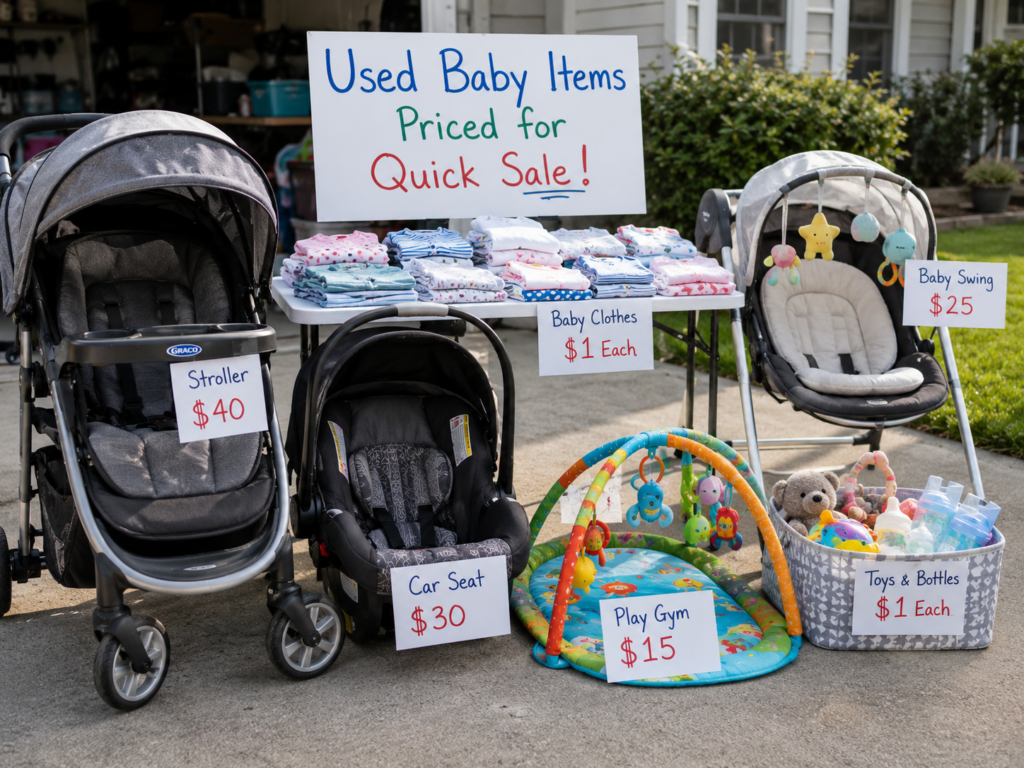
Babies outgrow gear fast, and most parents end up with a garage full of strollers, car seats, and clothes that still have plenty of life left. The hard part isn’t deciding to sell — it’s figuring out what to charge. Price too high, and the listing sits untouched for weeks. Price too low, and you leave real money on the table.
This guide breaks down exactly how to price used baby items for a quick, fair sale in 2026 — covering what actually affects value, category-by-category pricing ranges, a step-by-step pricing process, real pricing examples, and the mistakes that quietly kill a listing’s chances.
Whether you’re clearing out a nursery after your youngest outgrew everything, or you bought gear you never ended up needing, the same core rule applies: buyers are comparing your listing against several others in real time. A well-priced item with honest photos usually sells within a few days. A mispriced one can sit for weeks, get relisted, and eventually sell for less than it would have if it had been priced right from the start.
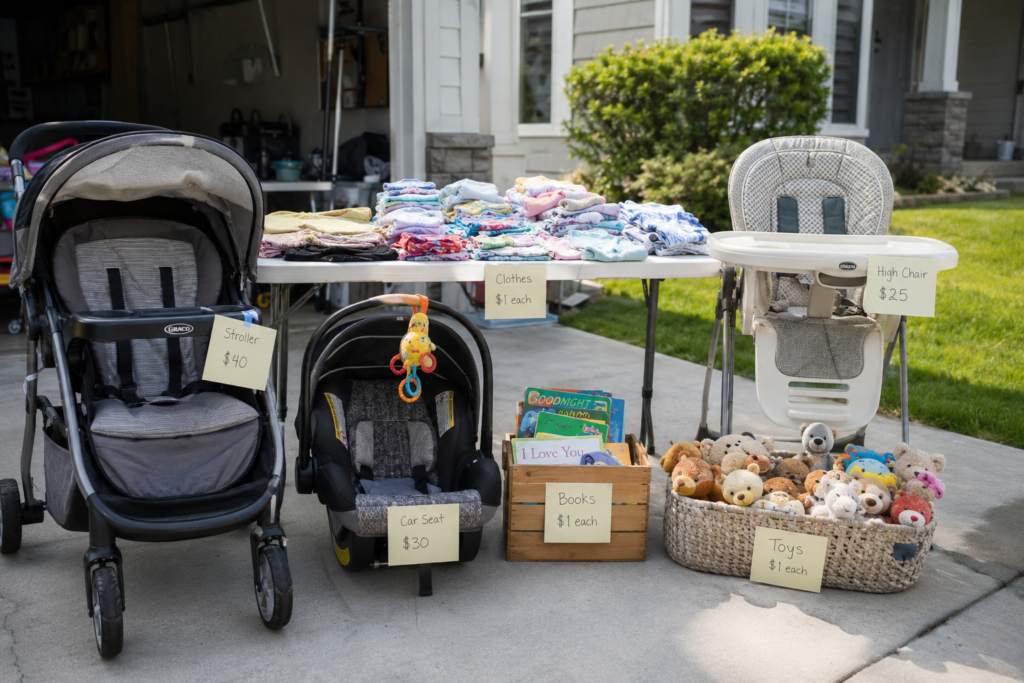
Why Getting the Price Right Matters
Parents shopping for used baby gear compare listings fast. Most scroll through a marketplace app, skim five or six similar items, and message the seller with the best combination of price, condition, and photos — usually within the first day the listing goes live.
If your price is too high compared to similar listings, buyers simply skip it. There is rarely a negotiation stage; they move to the next result. If it’s priced too low, you’ll sell quickly, but you’re giving away value the item still has.
The goal isn’t just “sell it eventually.” It’s pricing the item so it looks like a fair deal within the first few scrolls — because that is what actually moves it fast.
What Affects the Price of a Used Baby Item
1. Brand and Original Retail Price
A stroller that retailed for $600 will always be worth more used than one that retailed for $150, even at the same percentage of depreciation. Start every pricing decision by confirming what the item cost new — check the brand’s current website or a recent retailer listing, since baby gear prices shift year to year.
2. Condition
Buyers generally sort used baby items into three tiers:
- Like new — used briefly, no stains, scratches, or wear, often still has tags or original packaging.
- Gently used — normal wear from regular use, fully functional, minor cosmetic marks.
- Well used — visible wear, possible minor repairs, stains, or missing minor parts, but still safe and usable.
Be honest about which tier your item falls into. Buyers can see photos, and an inflated condition claim just leads to messages you’ll have to talk down anyway.
A quick way to self-check condition before pricing: look at the item under daylight, not indoor lighting, which hides scuffs and fading. Test every moving part — wheels, recline mechanisms, buckles, folding hinges — and note anything that sticks, squeaks, or doesn’t lock properly. These small details rarely change the sale, but leaving them out of the listing is the fastest way to get a lowball offer or a return request after pickup.
3. Age and Safety Status
Some baby items have hard expiration or recall risks that directly affect what you can charge — or whether you should sell them at all.
- Car seats expire, typically 6–10 years from the manufacture date depending on the brand, and shouldn’t be sold or bought once expired.
- Cribs and playards should meet current safety standards; older drop-side cribs are generally unsellable.
- Any item under an active recall should be disclosed, repaired if a fix exists, or not sold at all.
Before listing any car seat, crib, or playard, check the manufacture date and run the model through the CPSC recall database — it takes under a minute and protects both you and the buyer.
4. Completeness
A stroller with the original box, rain cover, car seat adapter, and manual will sell for noticeably more than the same stroller with just the frame. List every included accessory in your description — missing pieces are one of the most common reasons buyers negotiate the price down.
This matters even more for items with modular parts, like travel systems, high chairs with multiple recline attachments, or breast pumps with separate flange sizes. Buyers researching a specific model usually already know what should be included, so an incomplete set stands out immediately and either gets passed over or negotiated down well below your asking price.
5. Demand and Season
Timing shifts what people are willing to pay. Swings, bouncers, and newborn gear sell faster (and closer to full price) in the weeks before a local baby-shower season or right after the holidays, when new parents are actively shopping. Snowsuits and cold-weather gear move fastest in early fall, not mid-winter when the season is almost over.
The same logic applies in reverse: listing a snowsuit in March, or heavy winter gear in June, usually means accepting a lower offer just to clear space, since demand has already dropped for the season. If you can wait a few weeks for the right season, you’ll often get a noticeably better price for the same item with zero extra effort.
6. Local Market vs. Online Marketplace
Prices vary by where you sell. Local pickup through a marketplace app or a buy-nothing group usually gets faster responses at a slightly lower price, since there’s no shipping hassle for the buyer. National platforms and consignment sites can fetch more for higher-value items like designer strollers, but expect fees and shipping to eat into the final number.
7. Shipping Weight and Packaging
Bulky items like cribs, playards, and full-size strollers are expensive and awkward to ship, which pushes most sellers toward local-pickup-only pricing for these categories. Smaller, lightweight items — carriers, feeding accessories, clothing — travel well and are worth listing on national platforms where the buyer pool, and often the price, is larger.
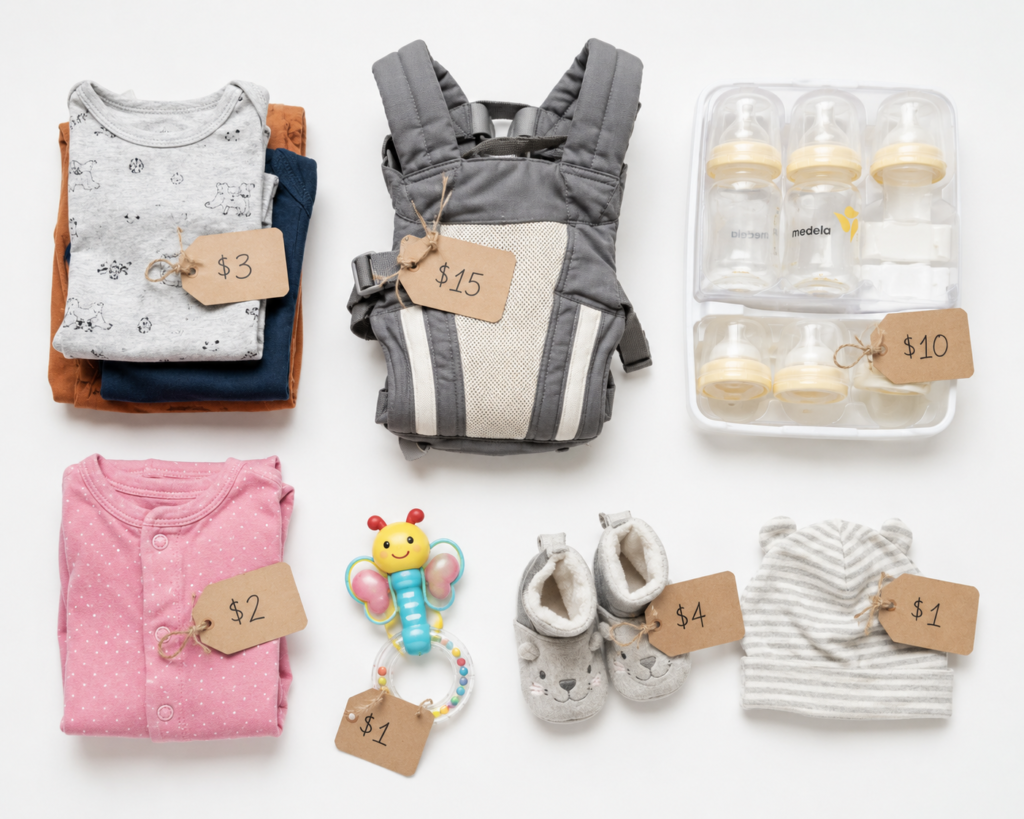
General Pricing Guide by Category (% of Original Retail Price)
Use this as a starting range, then adjust up or down based on brand, condition, and completeness.
| Item Category | Like New (Retail %) | Gently Used (Retail %) | Well Used (Retail %) |
| Strollers | 60–70% | 40–55% | 20–35% |
| Car Seats* | 50–60% | 35–45% | Not recommended past 6 yrs |
| Cribs | 50–65% | 35–50% | 20–30% |
| High Chairs | 50–60% | 30–45% | 15–25% |
| Baby Carriers/Wraps | 55–65% | 35–50% | 20–30% |
| Baby Clothes (bundle) | 40–50% | 20–35% | 10–15% |
| Bouncers/Swings | 50–60% | 30–45% | 15–25% |
| Toys (gear-related) | 45–55% | 25–40% | 10–20% |
| Feeding Items | 40–50% | 20–30% | Discard/donate |
| Diaper Bags | 45–55% | 25–40% | 15–25% |
*Never price or sell a car seat past its expiration date, after a moderate-to-severe crash, or under an unresolved recall — list the manufacture date clearly so buyers can verify it themselves.
Real-World Pricing Examples
Numbers make more sense with real scenarios. Here’s how the percentage guide plays out for a few common items:
Example 1: Mid-Range Stroller
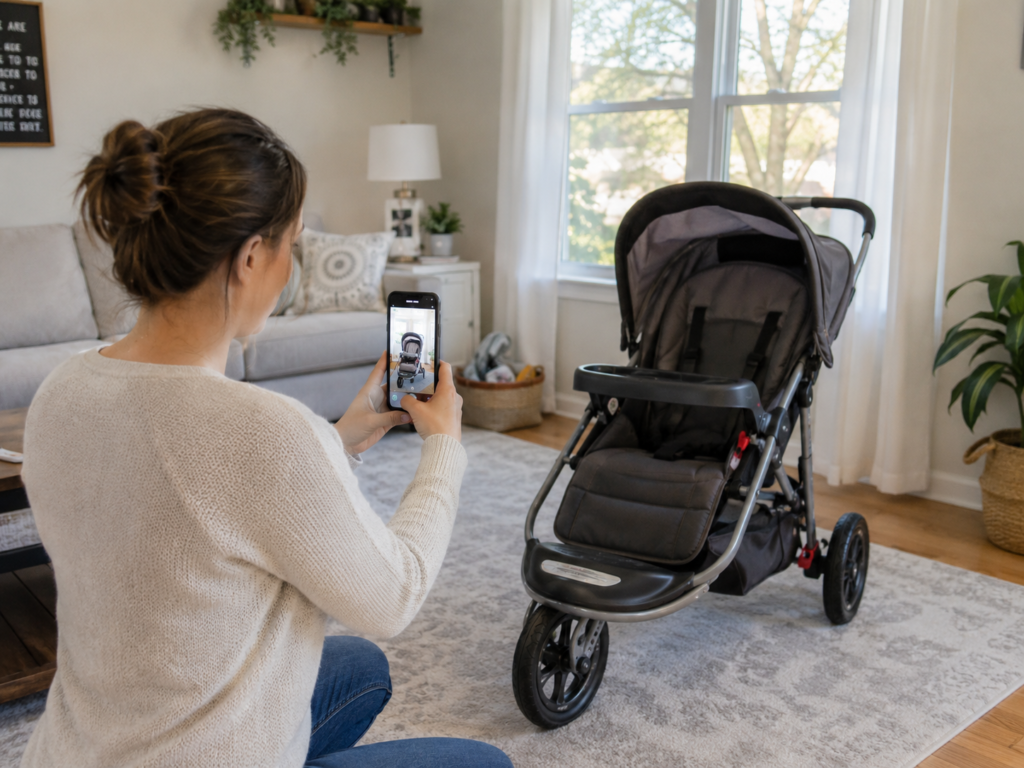
Original retail price: $350. Condition: gently used, minor wear on the fabric, wheels and brakes work fine, includes the rain cover but not the original box. Using the 40–55% range for gently used strollers, a fair asking price lands around $155–$180. Listing it at $175 with clear photos of the wear leaves a little room to negotiate down to $150 if needed.
Example 2: Convertible Car Seat
Original retail price: $250. Manufactured 2 years ago, no recalls, no crash history, light wear on the fabric cover. Using the 35–45% gently used range, a fair price is roughly $88–$113. Because car seats carry safety concerns, mentioning the manufacture date and a clean recall check in the listing itself often supports pricing at the higher end of that range.
Example 3: Newborn Clothing Lot
Twenty pieces of 0–3 month clothing, all in good condition, mixed brands. Individually, these might sell for $1–$3 each, but most buyers skip single-item baby clothing listings entirely. Bundled as a lot and priced around $25–$35, the same clothes read as a good deal and typically sell within a day or two.
Example 4: Wooden Crib
Original retail price: $400. Two years old, solid condition, meets current safety standards, missing the original mattress. Using the 35–50% gently used range, a fair price is about $140–$200. Since cribs are bulky and local-pickup-only for most sellers, pricing toward the lower end of that range tends to move it faster, since fewer buyers are willing to arrange transport for a premium price.
Step-by-Step: How to Price Your Baby Items for a Quick Sale
Step 1: Confirm the Original Retail Price
Search the current or most recent retail price for the exact model. Prices change year to year, so don’t rely on what you remember paying — look it up.
Step 2: Assess Condition Honestly
Walk through the item and note every flaw: stains, scratches, squeaky wheels, faded fabric, missing screws. This becomes both your pricing baseline and your listing description.
Step 3: Research Comparable Listings
Search the same brand and model on active marketplaces to see what similar items are actually listed for — and, where possible, what they’ve actually sold for, not just the asking price. Sold listings on sites like eBay give a more realistic number than active listings, since anyone can list an item high and never sell it.
If you haven’t decided where to sell yet, our guide to where to sell used baby items in the US breaks down the best platforms by item type, fees, and how fast each one typically sells.
Step 4: Check for Recalls and Expiration Dates
Before finalizing a price for a car seat, crib, or playard, verify it against the CPSC recall database and check the manufacture date. A clean recall check is also worth mentioning in your listing — it builds buyer trust and often justifies the higher end of your pricing range.
Step 5: Decide Your Goal — Fast Cash or Maximum Profit
Pricing at the lower end of the range (or slightly below comparable listings) usually sells within a day or two. Pricing at the upper end can get more money, but expect the item to sit longer and require more back-and-forth negotiation. Pick a lane based on how quickly you actually need the space or the cash.
A simple way to decide: if the item is taking up space you need back this week, price to sell fast. If it’s sitting in storage with no urgency, it’s reasonable to list higher and wait for the right buyer over a few weeks. There’s no wrong answer here — just be intentional about which trade-off you’re making instead of picking a number at random.
Step 6: Bundle Related Items
Newborn clothing, feeding items, and small toys sell faster and for better total value as a bundle than as individual $2–$3 listings. A “0–3 month clothing lot” or “feeding starter set” reads as a deal, even if the per-item price is similar.
Step 7: Leave Small Room to Negotiate
Price about 5–10% above your actual target number. Buyers on resale marketplaces often expect to negotiate, and a small cushion lets you agree to a lower offer without going below what you actually wanted.
How to Handle Offers and Negotiation
Once your price is live, most negotiation happens through short messages rather than back-and-forth haggling in person. A few habits keep this smooth and keep the sale moving instead of stalling:
- Set a firm walk-away number for yourself before the first message comes in, so you’re not deciding under pressure.
- If an offer is close to your target, accept it — a quick sale is usually worth more than a few extra dollars from a slower one.
- For lowball offers, a short, polite counter (“I can do $X, firm”) usually gets a better response than ignoring the message.
- If multiple people are interested, say so plainly (“a few others have asked too”) — it’s honest, and it naturally speeds up decision-making without needing to sound pushy.
Common Pricing Mistakes to Avoid
- Pricing based on what you paid, not what the item is worth now — depreciation happens fast in the first year.
- Ignoring comparable listings and guessing a number instead.
- Listing a stained or heavily worn item at “gently used” pricing — buyers notice in the photos.
- Selling an expired or recalled car seat, which is both unsafe and hard to sell once buyers check the date.
- Pricing every small item separately instead of bundling, which discourages buyers from even opening the listing.
- Leaving no room to negotiate, then losing interested buyers over a $5 gap.
- Forgetting to factor in shipping costs or platform fees when pricing for national marketplaces, which can quietly eat 10–15% of the final price.
- Not updating the price after a week or two of no interest, which lets a listing quietly go stale and sink in search results.
Where to Sell Once You’ve Set Your Price
The right platform depends on the item. High-value gear like strollers, car seats, and nursery furniture tends to do better on dedicated resale marketplaces or local buy/sell groups, while clothing and small accessories move faster in bundle-friendly apps. Our guide on selling used baby gear online in the US covers the best marketplaces for each item type, including which ones charge fees and which are built for local, no-shipping sales.
Tips to Help Your Priced Listing Sell Faster
- Use natural light and photograph the item from multiple angles, including any flaws — it builds trust and cuts down on “is this still available” messages.
- Write a short, specific description: brand, model, age, what’s included, and why you’re selling.
- List during evenings or weekends, when local buyers are actively browsing marketplace apps.
- Respond to messages within a few hours — slow replies are one of the most common reasons a ready buyer moves on to another listing.
- Reprice every 7–10 days if there’s no interest; a small drop often re-triggers marketplace visibility.
Quick Pricing Checklist
Before you publish any listing, run through this short checklist. It takes a few minutes and catches most of the mistakes that lead to a stalled sale:
- Confirmed the current retail price for this exact brand and model.
- Honestly sorted the item into like new, gently used, or well used.
- Checked the manufacture date and recall status for car seats, cribs, or playards.
- Compared at least three similar active or sold listings on the platform you’re using.
- Decided whether the goal is a fast sale or the highest possible price.
- Listed every included accessory, and noted anything missing.
- Added 5–10% cushion above the target price to leave room for negotiation.
- Took photos in daylight from multiple angles, including any flaws.
Sellers who work through this list before publishing consistently get faster responses and fewer lowball offers, simply because the listing already answers the questions a buyer would otherwise have to ask.
Frequently Asked Questions
How much should I sell a used stroller for?
Most used strollers in gently-used condition sell for 40–55% of their original retail price. Premium or travel-system strollers can hold value slightly better if the frame, wheels, and fabric are in strong condition.
Is it safe to sell a used car seat?
Yes, as long as it hasn’t expired, hasn’t been in a moderate-to-severe crash, and isn’t under an active recall. Always list the manufacture date and encourage the buyer to verify it themselves before purchase.
What baby items don’t sell well used?
Breast pump parts that touch milk, worn-out feeding items, expired car seats, and drop-side cribs generally don’t sell — and shouldn’t be listed for safety and hygiene reasons. These are better donated to organizations that can dispose of them properly or recycled where possible.
Should I price bundles or individual items?
Bundle low-value items like clothing, small toys, and feeding accessories. Price higher-value gear like strollers, car seats, and furniture individually so buyers can evaluate condition and price on its own merit.
How do I know if my price is too high?
If a listing gets views but no messages within 5–7 days, it’s usually priced above what buyers are comparing it to. Check current comparable listings again and adjust down by 10–15%.
Do platform fees affect how I should price an item?
Yes. Local-pickup marketplaces typically don’t charge seller fees, so the price you list is close to what you’ll actually receive. National platforms and consignment sites often take a percentage plus payment processing fees, so it’s worth pricing slightly higher on those platforms to end up with the same net amount in hand.
Should I round my price to a clean number?
Clean, round numbers ($40, $75, $150) tend to perform better on local marketplaces since they’re easy to skim and easy to negotiate from. Odd, specific numbers ($42.37) look more common on national resale sites where pricing is often calculated more precisely.
Final Thoughts
Pricing used baby items well isn’t about guessing — it’s about checking retail value, being honest about condition, confirming safety status, and comparing against what similar items are actually selling for. Get those four right, and most listings move within days instead of sitting for weeks. For more category-specific pricing and selling guides, visit Used Items Guide for the latest 2026 resale insights.
