

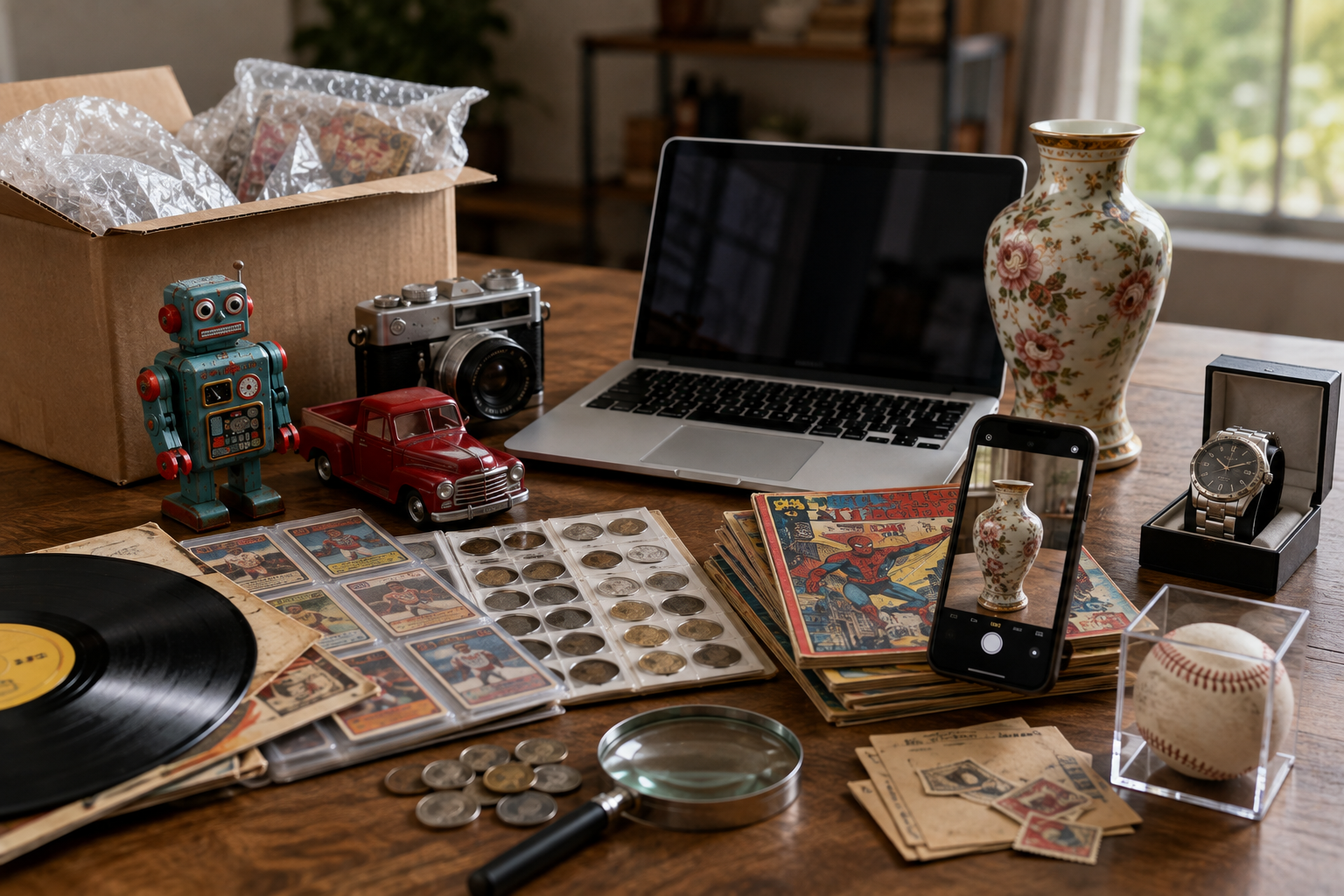


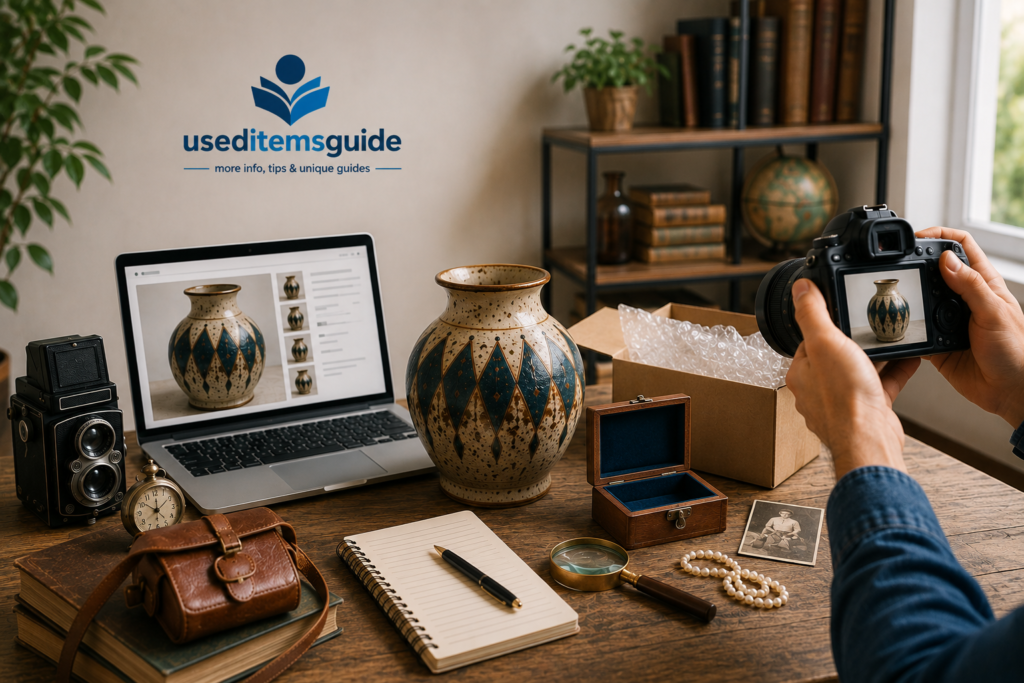
Selling vintage items online can be more profitable than accepting the first local offer, but the best price usually comes from preparation rather than luck. Buyers want to know what an item is, how old it is, what condition it is in, whether it is authentic, and why the asking price makes sense. If you are building a broader selling strategy, start with our Where to Sell Vintage Items guide for an overview of selling channels.
What Makes a Vintage Item Valuable?
Age alone does not determine price. Two objects from the same decade can have very different values because of brand, rarity, condition, demand, provenance, materials, and current trends. A smart seller looks at all of these factors before choosing a price.
· Age and era: Identify the approximate decade or period.
· Brand or maker: Known manufacturers, designers, artists, and makers can attract stronger demand.
· Rarity: Limited production, unusual colors, discontinued models, and scarce variations may increase interest.
· Condition: Original, complete, clean, and well-preserved pieces generally have an advantage.
· Authenticity: Buyers pay more confidently when identifying marks, labels, signatures, or documentation support the description.
· Demand: A desirable item can sell faster and for more than a similar item with little current demand.
· Provenance: Receipts, original packaging, family history, or other credible background can help when the information is relevant and verifiable.
Vintage vs. Antique vs. Collectible
Do not use these terms interchangeably. Vintage generally describes an item from an earlier period that is old enough to have historical or stylistic interest. Antique is commonly used for older objects, often 100 years or more, although definitions can vary by context. Collectible is broader and can include newer items that people intentionally collect.
Marketplace rules can also define terms differently. For example, Etsy says items listed as vintage must be at least 20 years old. Always check the current rules of the marketplace you choose before listing.
How to Prepare Vintage Items Before Selling
1. Identify the Item Carefully
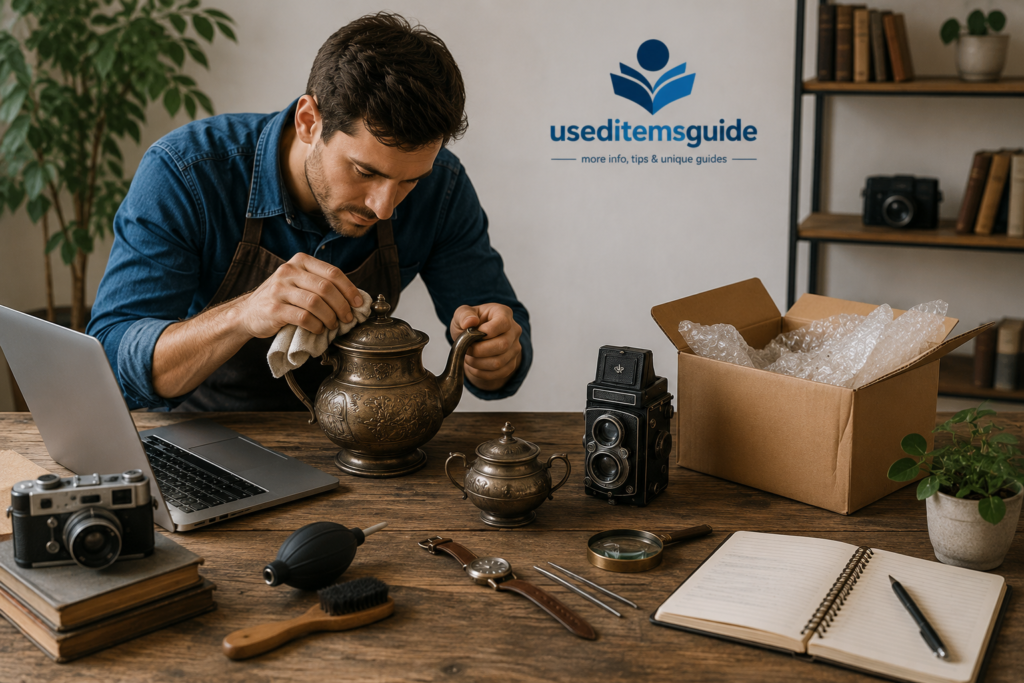
Start by recording everything you can verify. Look for maker’s marks, labels, model numbers, dates, signatures, stamps, serial numbers, country-of-origin marks, and construction details. Search those details rather than relying only on a broad description such as ‘old vase’ or ‘retro jacket.’
Write down measurements and materials. For clothing, record measurements in addition to the tagged size because vintage sizing can differ significantly from modern sizing. For furniture, include height, width, depth, and any relevant weight information.
2. Check Condition Without Hiding Problems
Condition can make or break a vintage sale. Inspect the item under good lighting and look for chips, cracks, stains, fading, missing parts, repairs, odors, rust, scratches, loose seams, replaced hardware, and signs of restoration.
· Clean only when you know the material can tolerate it.
· Do not remove patina simply to make an item look newer.
· Photograph meaningful flaws instead of describing them vaguely.
· Mention repairs or replacement parts clearly.
· If you are unsure whether a mark is damage or part of the original design, say so rather than guessing.
3. Preserve Evidence of Authenticity
If the item has a label, signature, serial number, original box, receipt, certificate, or other supporting material, photograph it and keep the information organized. Do not claim an item is authentic simply because it looks right. For higher-value pieces, professional authentication or an expert opinion may be worth considering.
How to Research the Best Selling Price
Pricing is one of the most important steps because a price that is too high can leave an item sitting for months, while a price that is too low can cost you money. The strongest starting point is research into comparable items rather than guessing from what someone is asking.
Use Sold Prices, Not Just Asking Prices
An active listing shows what a seller hopes to receive. A completed sale gives you stronger evidence of what a buyer actually paid. Look for comparable examples with the same or similar maker, model, era, condition, size, and included accessories.
Compare several sales instead of copying one unusually high or low result. If the closest examples cluster around a range, that range gives you a better foundation for your asking price.
Adjust for Condition and Completeness
A nearly identical item can sell for very different amounts when one is complete and the other has damage or missing parts. Make adjustments for condition, rarity, color, size, packaging, accessories, and documentation.
· Excellent condition: Consider the upper end of comparable sales when demand supports it.
· Average condition: Price around the middle of comparable results.
· Damaged or incomplete: Price lower and describe the problem clearly.
· Rare or unusually desirable: Research more deeply before accepting a low offer.
Leave Room for Negotiation
If you expect buyers to make offers, build a reasonable negotiation range into the price. Do not inflate the price simply to create a large discount. A realistic asking price with a small negotiation margin can look more credible than an unrealistic price followed by a dramatic markdown.
Choose the Right Marketplace
There is no single best website for every vintage item. The right platform depends on what you are selling, how much it is worth, how quickly you want it gone, and how much work you are willing to do.
eBay
eBay is useful when you want access to a broad buyer base and when your item has a clear collectible or resale market. Auction and fixed-price formats can both be useful depending on demand. eBay’s current seller fee structure varies by category and seller setup, so check the current fee schedule before setting your minimum acceptable price.
Etsy
Etsy can be a strong fit for vintage clothing, decor, jewelry, paper goods, and other items that appeal to shoppers looking for vintage or distinctive products. Etsy states that vintage items must be at least 20 years old. Its current fee structure includes a $0.20 listing fee and a 6.5% transaction fee, with other fees potentially applying.
Other Marketplaces and Local Channels
Specialty marketplaces can work well when your item has a focused audience. Local marketplaces may be better for bulky furniture because you can avoid shipping. Social selling can also help when you already have an audience, but make payment and pickup arrangements carefully.
For a broader comparison of platforms, see our Best Places to Sell Vintage Items Online guide.
How to Create a Listing That Gets Attention
Write a Specific, Search-Friendly Title
Your title should help a buyer understand exactly what the item is. Include the strongest identifying details first, such as brand, item type, model, era, material, style, size, or notable feature. Avoid stuffing every possible keyword into the title.
For example, instead of ‘Beautiful Old Vintage Item,’ use a factual title such as ‘Vintage Pyrex Mixing Bowl 401 Turquoise 1950s 2.5 Quart.’ Only include details you can support.
Build a Useful Description
A strong description answers the questions a buyer would ask before purchasing. State what the item is, what you know about its age or era, measurements, materials, condition, flaws, included accessories, and anything unusual.
· What is included?
· What are the exact dimensions?
· Are there marks, labels, signatures, or model numbers?
· What damage or wear is present?
· Has it been repaired, restored, or modified?
· How will it be packed and shipped?
· Are returns accepted under your chosen marketplace’s policy?
Use High-Quality Photos
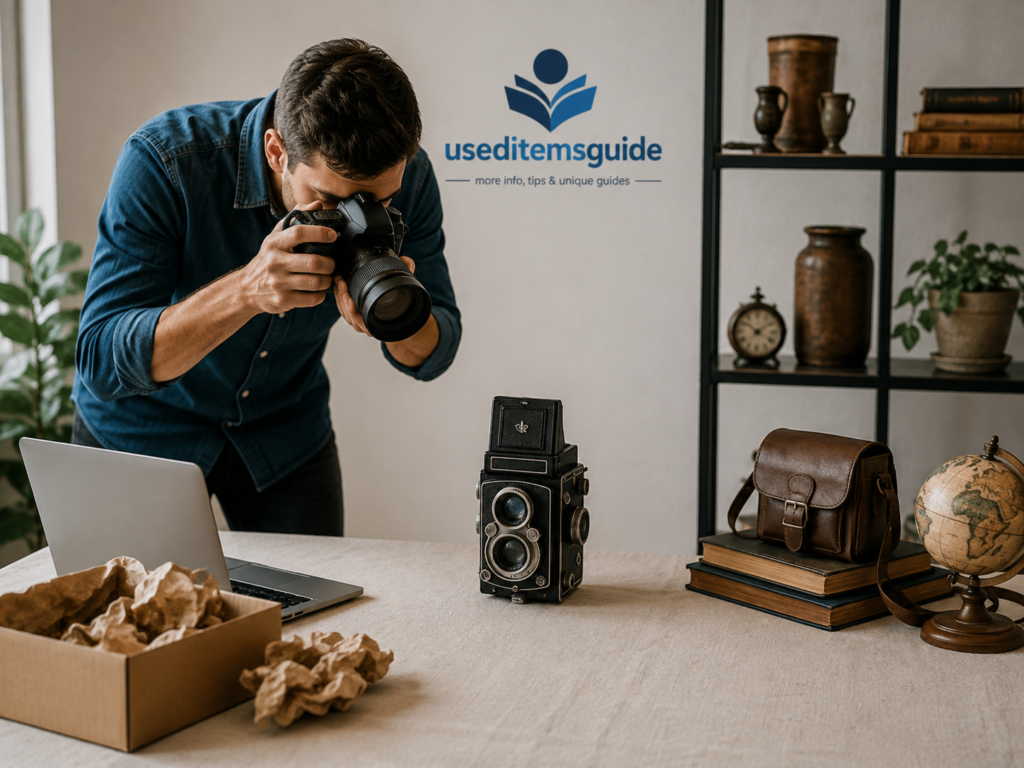
Photos are one of the strongest trust signals in an online vintage listing. Use natural or even lighting, a clean background, and enough images to show the entire item. Photograph the front, back, sides, bottom, labels, maker’s marks, details, scale, and flaws.
· Use the highest practical image quality allowed by the marketplace.
· Keep the item in focus.
· Show true condition rather than hiding wear.
· Include close-ups of important marks and labels.
· Use a measurement photo when size may be difficult to judge.
How to Write a Description That Builds Buyer Trust
Vintage buyers often know what they are looking for. Overly enthusiastic claims can make a listing less trustworthy, especially when they are not supported by evidence. Use precise language. If you know the maker and approximate era, say what you know. If the age is uncertain, say that it is estimated rather than presenting the estimate as fact.
Explain condition honestly. ‘Minor surface wear consistent with age’ is useful when accurate, but it should not replace a specific explanation. Tell the buyer where the wear is and how visible it is. Transparency can prevent disputes and reduce returns.
How to Get the Best Price Without Waiting Forever
Time Your Listing Around Demand
Some vintage categories are seasonal. Clothing, holiday decor, outdoor goods, school-related items, and certain home products may attract more attention at particular times of year. Watch your category’s demand and avoid assuming that every vintage item should be listed immediately at the same price.
Improve the Listing Before Cutting the Price
If an item gets views but no purchase, the problem may not be the price. Review the main photo, title, description, measurements, shipping cost, and condition details first. If buyers are not clicking, improve the presentation. If they are clicking but not buying, investigate price, shipping, trust signals, or missing information.
Use Offers Strategically
Offers can help convert interested buyers without immediately lowering the public asking price. Set a minimum you can accept after marketplace fees, shipping, packaging, and your desired profit. Do not accept an offer that looks good before expenses but leaves you with little or no margin.
Shipping Vintage Items Safely
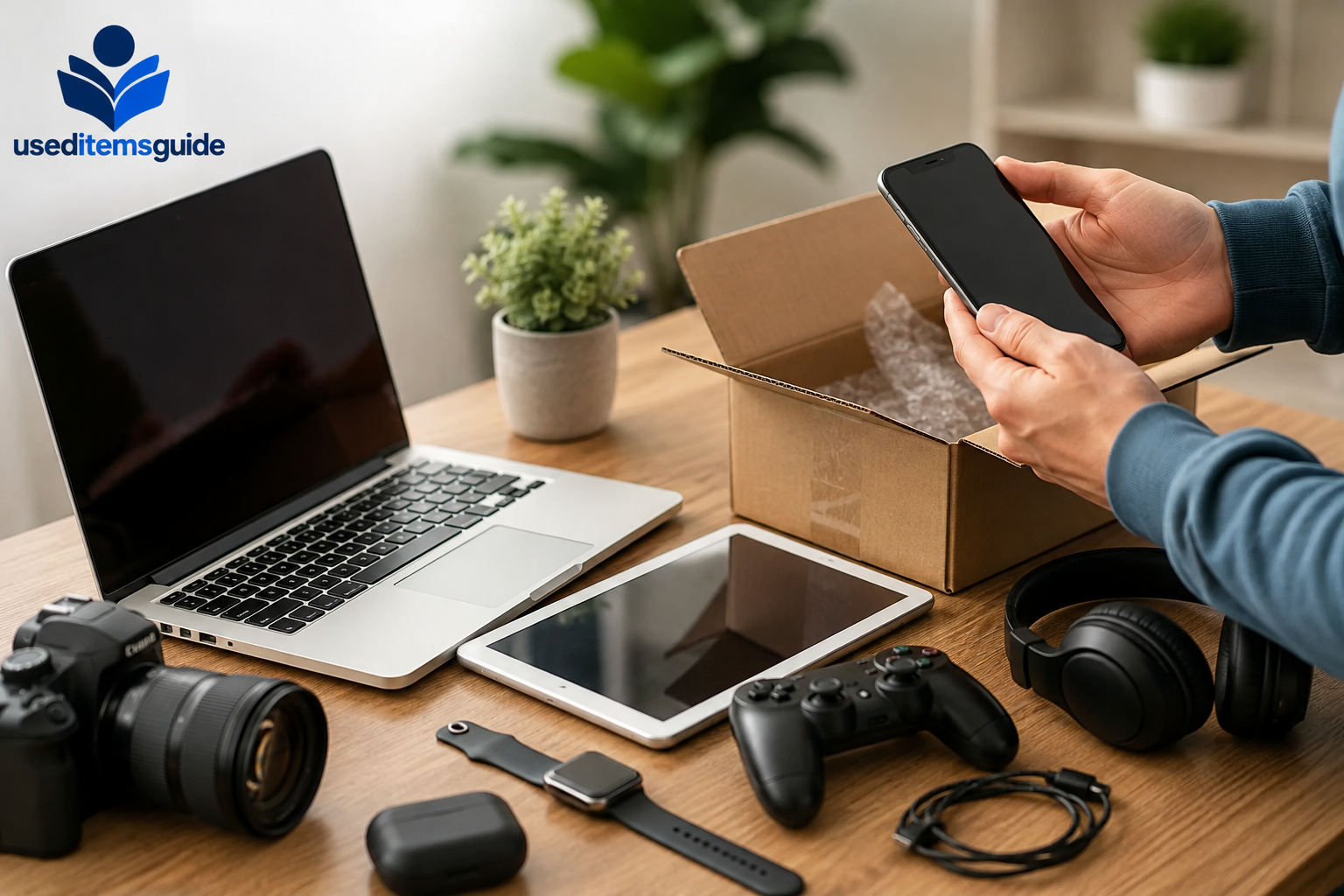
A profitable sale can become an expensive mistake if the item arrives damaged. Choose packaging based on the item’s material, shape, weight, fragility, and value. Fragile glass, ceramics, framed pieces, and delicate accessories need more protection than durable clothing.
· Measure and weigh the packed item before calculating shipping.
· Use enough cushioning to prevent movement inside the box.
· Protect corners, handles, delicate finishes, and protruding parts.
· Consider double-boxing for especially fragile or valuable pieces.
· Keep photos of the packed item when appropriate for expensive shipments.
· Use tracking and insurance options when they make sense for the item’s value and destination.
Common Mistakes That Reduce the Selling Price
Pricing From Emotional Value
An item may have strong sentimental value to you without having the same market value to buyers. Separate personal memories from market evidence. Use comparable sales and objective characteristics to set the price.
Using One Comparable Sale
One sale can be an outlier. Research multiple comparable results and check whether the examples really match your item.
Hiding Damage
A buyer who discovers an undisclosed flaw after delivery is more likely to request a return or leave negative feedback. Honest disclosure is usually better for long-term selling.
Poor Photography
Dark, blurry, cluttered photos make buyers work too hard. They can also create uncertainty about condition and authenticity.
Ignoring Fees and Shipping
Your sale price is not your profit. Calculate marketplace fees, payment costs, packing materials, shipping, taxes you are responsible for, and any other selling expenses before deciding what price you need.
A Simple Pricing Formula for Vintage Items
A practical way to think about your minimum acceptable price is:
Minimum acceptable sale price = desired net amount + marketplace fees + payment costs + packaging + shipping costs you absorb + other selling expenses.
Then compare that number with actual market prices. If your required price is far above comparable sales, you may need to reconsider the platform, selling method, shipping arrangement, or expected profit.
Do not confuse revenue with profit. A $100 sale may leave much less after fees and expenses, while a $75 local sale with no shipping cost can sometimes produce a better result.
How to Handle Buyers and Negotiations
Respond to questions clearly and professionally. If a buyer asks for measurements, additional photos, or clarification, answer with facts. Avoid pressure tactics and do not make claims about scarcity unless you can support them.
· Know your lowest acceptable price before negotiating.
· Do not apologize for a reasonable asking price.
· Explain value with facts such as condition, rarity, maker, or documented sales.
· If an offer is too low, make a counteroffer or politely decline.
· Keep communication inside the marketplace when possible.
· Be cautious with requests to move payment outside the platform.
Vintage Selling Safety Tips
Online selling requires attention to both financial and personal safety. Use the payment and shipping systems recommended by the marketplace when practical. Be suspicious of requests involving overpayment, gift cards, unusual payment methods, fake shipping services, or pressure to move outside the platform.
For local pickup, choose a safe public location when appropriate and avoid sharing unnecessary personal information. For expensive items, verify payment before handing over the item. If a transaction feels unusual or rushed, pause and review the marketplace’s current safety guidance.
When Should You Sell Vintage Items Yourself or Use a Specialist?
Self-selling can make sense when you can research the item, photograph it, write an accurate listing, communicate with buyers, and handle shipping. A specialist, dealer, auction house, or consignment service may be worth considering for rare, expensive, highly specialized, or difficult-to-authenticate pieces.
The trade-off is control versus convenience. Selling yourself may give you more control over price and presentation, while a specialist can provide expertise and an established buyer network but will usually charge a fee or commission.
Quick Checklist Before You Publish
· Identify the maker, model, era, or category.
· Inspect and document condition.
· Measure the item accurately.
· Research multiple sold comparables.
· Calculate fees, shipping, and your minimum price.
· Choose a marketplace that fits the item.
· Take clear photos from multiple angles.
· Write a factual title and complete description.
· Disclose flaws and repairs.
· Choose a safe payment and shipping method.
· Review the final listing from a buyer’s perspective.
Final Takeaway
The best price for a vintage item usually comes from making the item easy to understand and easy to trust. Research comparable sales, identify the item accurately, document condition, use strong photos, choose a marketplace that matches the category, and calculate your real costs before accepting an offer.
If you want to explore more selling opportunities, visit Used Items Guide, then read Where to Sell Vintage Items and Where to Sell Collectibles. If you are researching related collectibles, our Where to Buy Labubu Dolls guide can also help you understand how niche collectible markets work.
